
Eastern Milk Snake
Overview:
Scientific Name: Lampropeltis triangulum triangulum
Size: 24 – 52” (total adult length)
Status: Locally common throughout most of its range.
Habitat:
Inhabits a wide variety of habitats from open woodlands, bogs, swamps, and woodland edges to marshes, lake shorelines, old fields, pastures, suburban parks and gardens.
Conservation:
The nocturnal foraging of the species is useful in staying out of sight in human occupied areas. Areas of intense agriculture or urban development reduce populations. Many people are frightened by their appearance and tail-buzzing habitat they are often persecuted. They are often fatally attracted to the warmth of black-topped roadways at night.
Best Management:
The creation of habitat structures that encourage basking opportunities and overwinter protections should be considered. Restore, maintain, or enhance nesting sites. If roads bisect suitable habitat areas, ensure that road crossings or protected culverts exist for the species.
Adult Coloration:
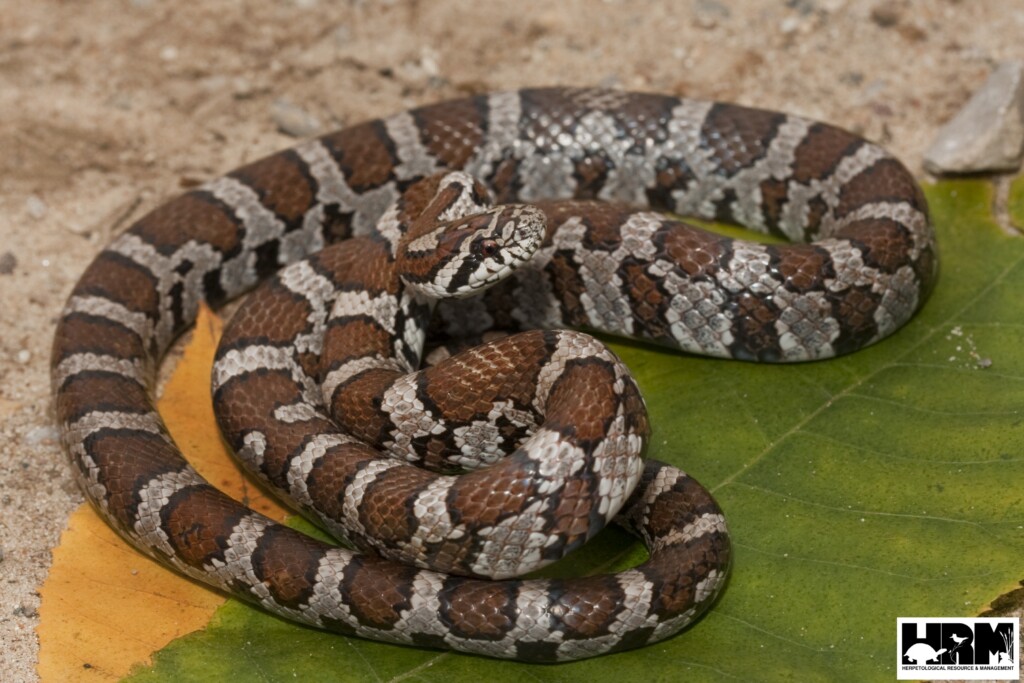
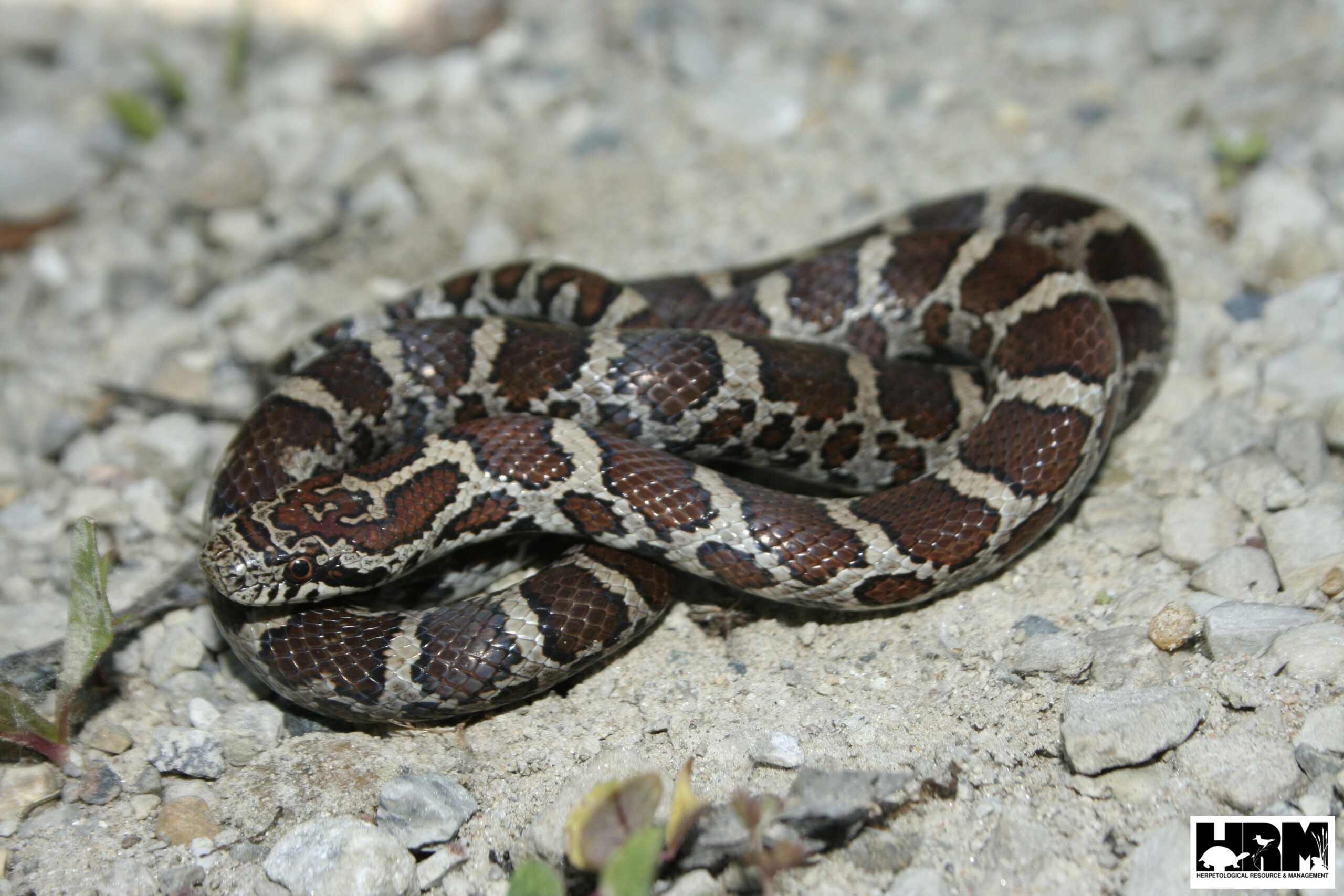
A grey or tan body with a row of brown or reddish-brown blotches that are edged in black. These markings alternate with one or two rows of smaller blotches on the sides. Often there is a light Y- or V-shaped marking on the back of the head. The belly is white, cream or pale yellow with an irregular checkerboard pattern of black spots which may fade to a darker coloration as they age. The iris is often reddish with a dark band from the eye to the back of the mouth.
Adult Characteristics:
A slender, medium bodied snake with smooth scales and a single anal plate. Males are slightly longer than females while gravid females will have thicker ends which quickly taper.
Juvenile Characteristics:
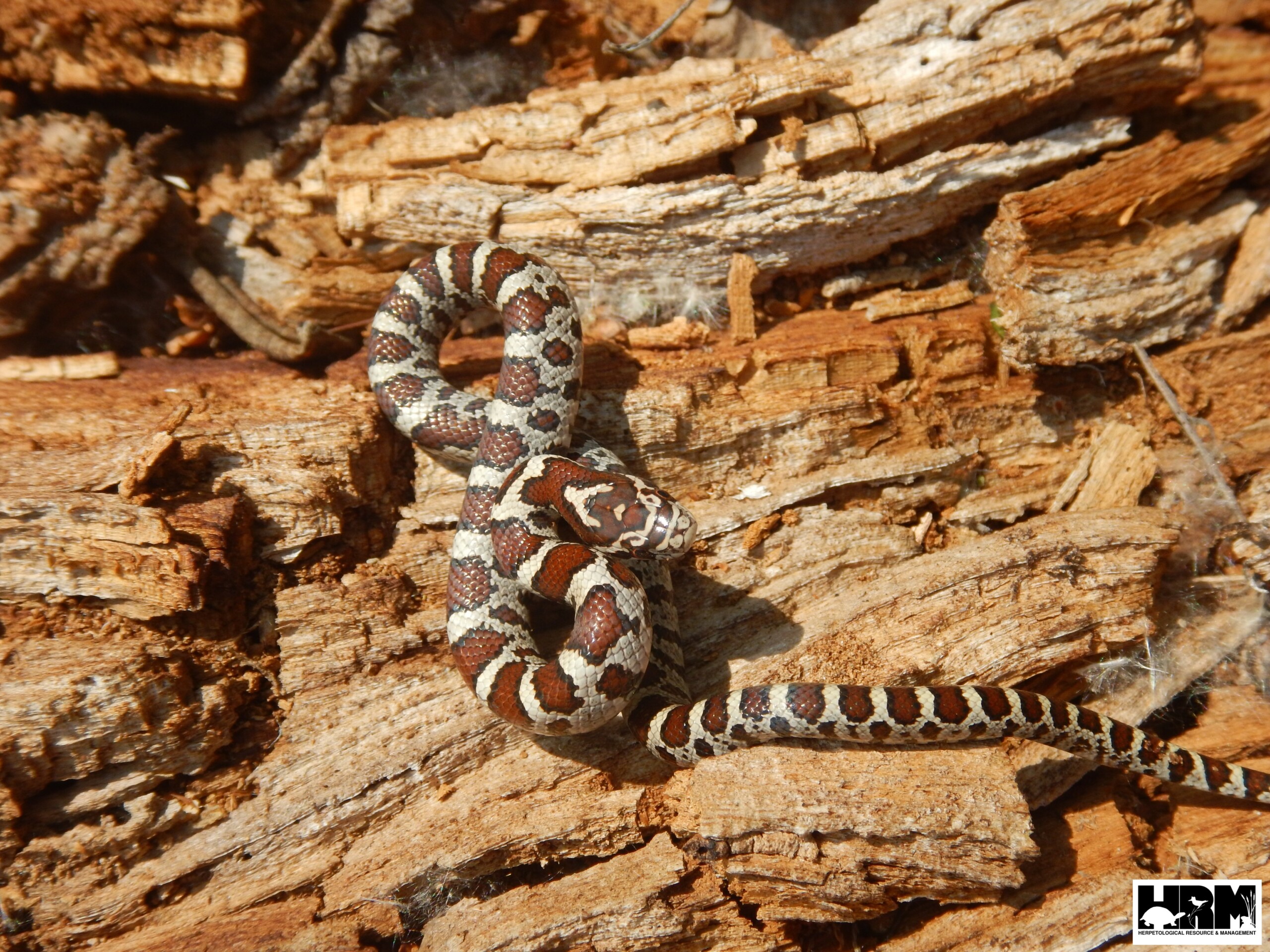
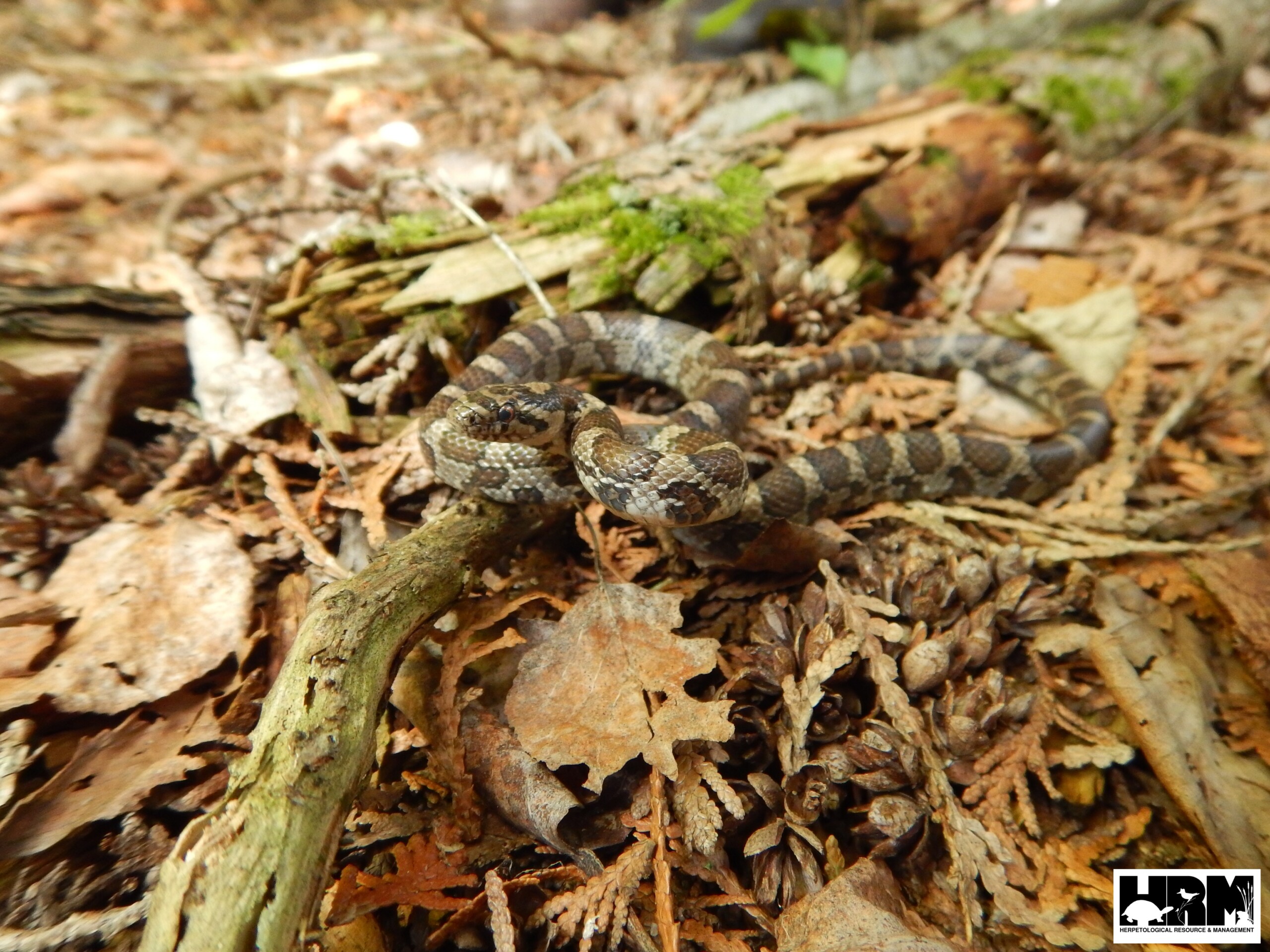
Hatchlings range from 6.6 to 11” in length with brighter coloration than adults with red or maroon blotches edged in black on a pale grey body.
Scale Count:
19 – 23 scale rows at midbody, usually 21.
Species Confused With:
Water Snakes have keeled scales and a divided anal plate. Juveniles are often mistaken for Racers, Black Rat Snakes, and Fox Snakes though all of these also have a divided anal plate.
Photos:
References:
- Amphibians and Reptiles of the Great Lakes Region by Jim Harding
- Conant, R., and Collins, J. T. 1998. Reptiles and Amphibians: Eastern, Central North America. Houghton Mifflin Harcourt Press.
- Harding, J and D. Mifsud. 2017. Amphibians and Reptiles of the Great Lakes Region: Revised Edition. Ann Arbor: The University of Michigan Press.
- Harding, J.H. and J.A. Holman. 2006. Michigan Snakes. MSU Extension Ext. Bulletin E-2000,74 pp. [revised].
- Holman, J. A. 2012. The Amphibians and Reptiles of Michigan: A Quaternary and Recent Faunal Adventure. Detroit, Mich., Wayne State University Press.
- Mifsud, David A., Sano, Melissa R., Seguchi, Kotaro J., 2026. Michigan Amphibian and Reptile Best Management Practices Third Edition. Herpetological Resource and Management Technical Publication 2026
- Ruthven, A. G., H. B. T. Gaige, et al. 1912. The herpetology of Michigan, by Alexander B. Ruthven. Crystal Thompson and Helen Thompson; Memoranda towards a bibliography of the archaeology of Michigan, by Harlan I. Smith; prepared under the direction of Alexander G. Ruthven. Lansing, Mich., Wynkoop Hallenbeck Crawford, State Printers.