
Eastern Garter Snake
Overview:
Scientific Name: Thamnophis sirtalis sirtalis
Size: 18 – 54” (adult total length)
Status: Historically more abundant but still locally abundant in much of its range, has experienced decline over the past couple of decades and the melanistic form is significantly less abundant
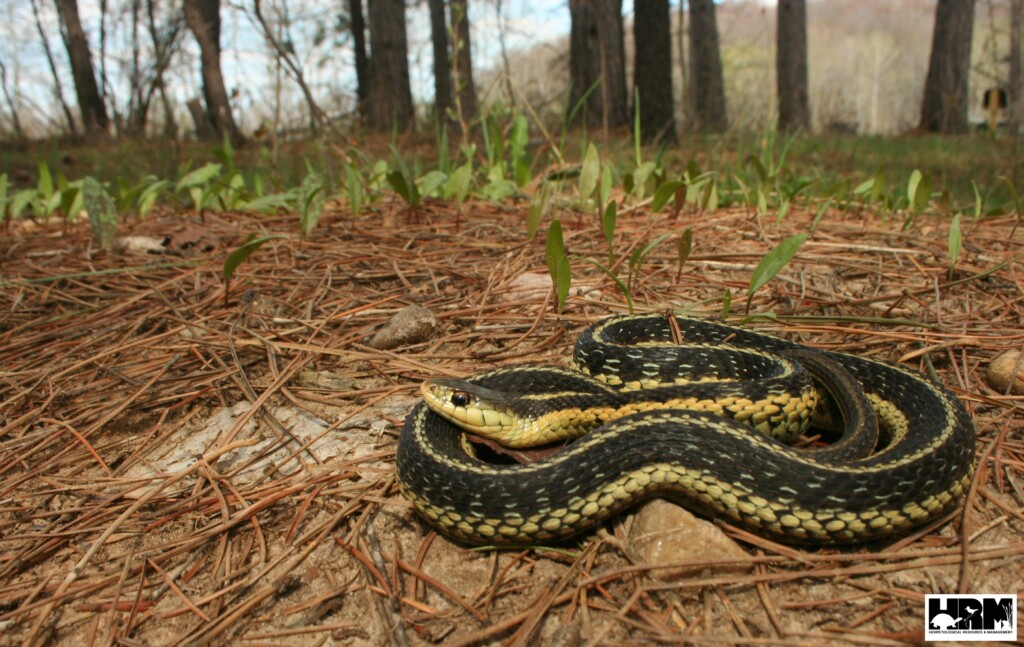
Habitat:
Found in a wide variety of habitats but most abundant in moist grassy areas especially near the edges of ponds, lakes, ditches of streams. Also occur in vacant urban and suburban areas with abundant cover both natural and artificial.
Conservation:
One of the most recognized species of snake due to their ability to survive in urban and suburban places. Often persecuted by homeowners and park visitors. Domestic animals such as cats, dogs, and pigs often attack them. Often killed by lawnmowers and cars. The use of persistent chlorinated-hydrocarbons in the mid-twentieth century reduced many populations. Newer pesticides are not as persistent but their effects on reptiles are not known. Habitat destruction and the above factors have led to local or regional population declines.
Best Management:
Consider the effects of altering or destroying vernal pools and other ponds. Do not impact the pool depression or core buffer area within 100 feet of the pools and aim to protect a wider buffer of 600 – 1000 feet around the pools. Try to maintain any habitat corridors to other vernal pools and upland habitats. Avoid burning brush piles, logs, or leaf piles where individuals may be in cover.
Adult Coloration:
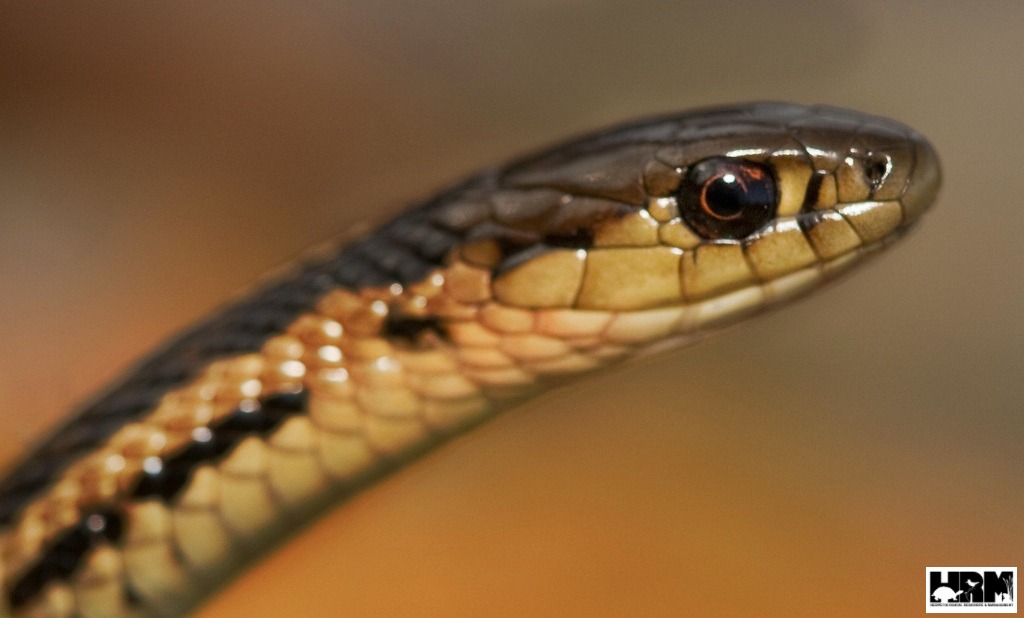
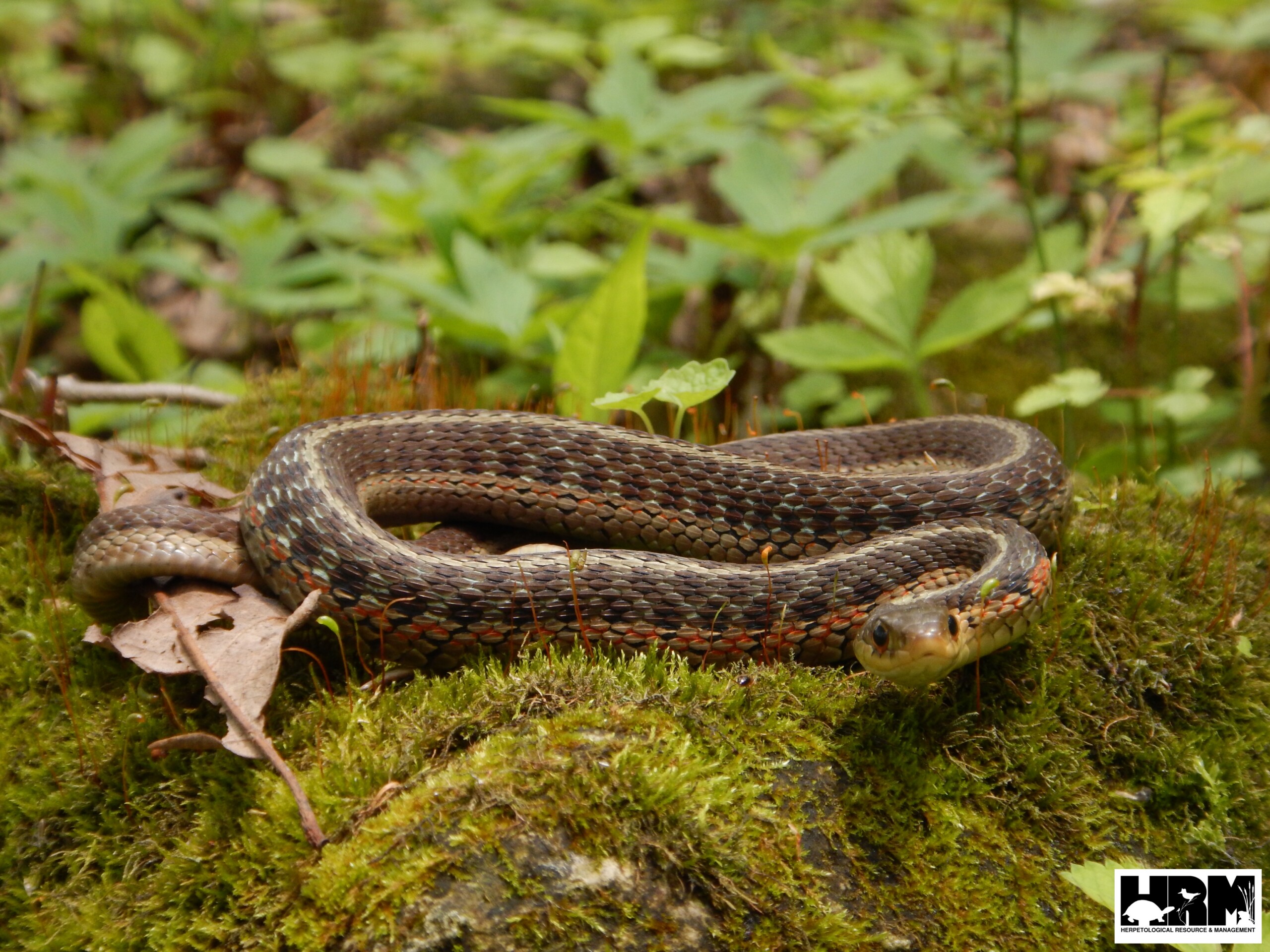
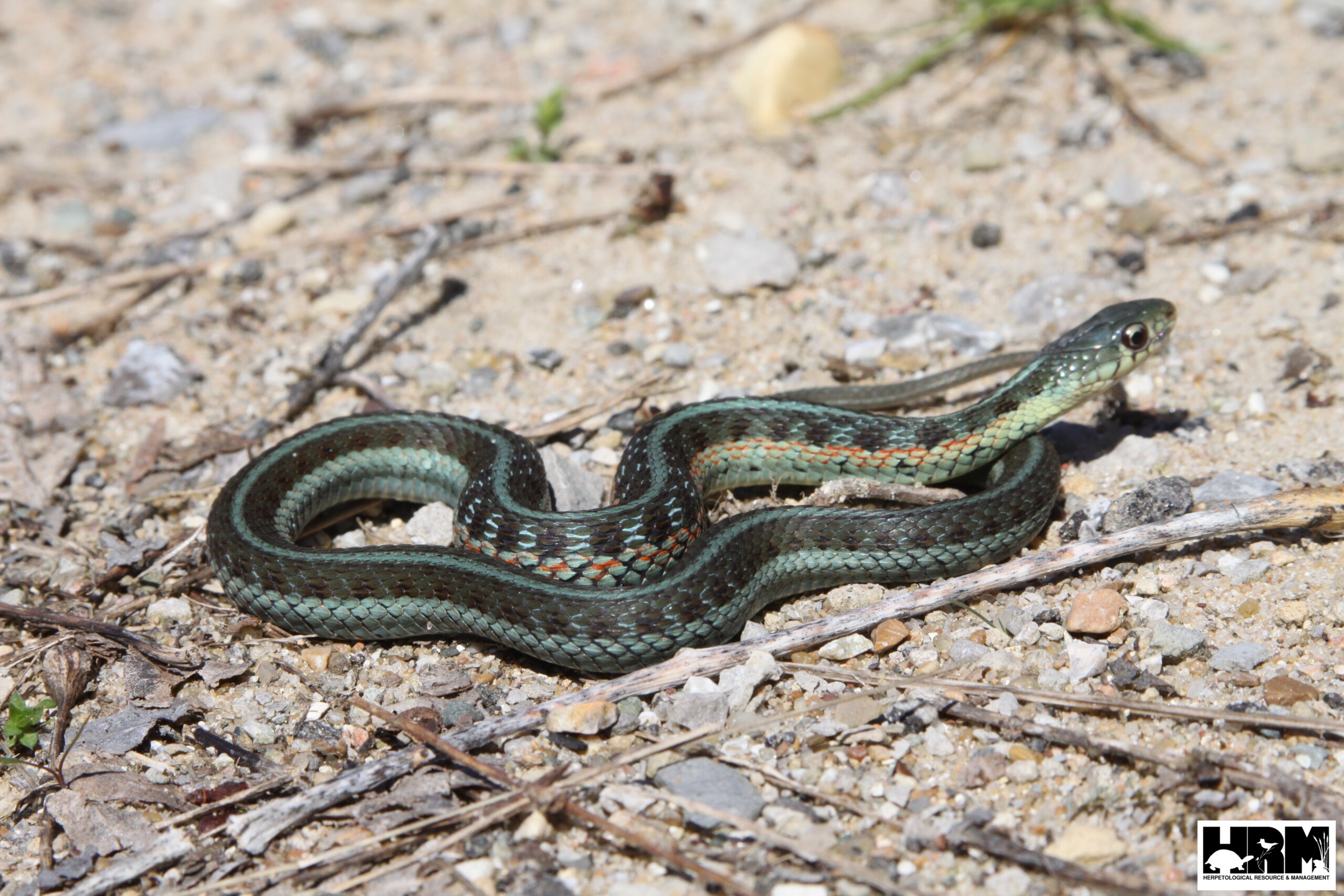
A black, brown, grey, or olive body with three light stripes. The stripes may be yellow, greenish-yellow, brown, bluish, or white. One stripe runs down the middle of the back and one stripe runs down each side of the body on scale rows 2 and 3. The stripes may be absent and rarely an individual will be uniformly dark (known as melanistic). Often between the stripes there is a checkerboard pattern. The labial scales (along the mouth) are yellow with a black edge, the tongue is red with a black tip. The chin, throat, and belly can be yellow, greenish-yellow, tan, or white. One or two small black spots on the edges of the ventral (belly) scutes is possible.
Adult Characteristics:
A moderately large snake with keeled scales (each scale has a small central ridge) and a single (undivided) anal plate. Males are smaller and thinner with longer tails than females.
Juvenile Characteristics:
Newborns have similar coloration as adults and range from 5 – 9” in length.
Scale Count:
19 scale rows at midbody
Species Confused With:
Ribbon Snakes have side stripes on scale rows 3 and 4. Butler’s Garter Snake has a small head that is about the same width as their neck and the side stripe extends on scale row 4. Melanistic Garter Snakes have both heavily keeled scales and an undivided anal plate unlike other solid black snakes in Michigan.
Photos:
References:
- Amphibians and Reptiles of the Great Lakes Region by Jim Harding
- Conant, R., and Collins, J. T. 1998. Reptiles and Amphibians: Eastern, Central North America. Houghton Mifflin Harcourt Press.
- Harding, J and D. Mifsud. 2017. Amphibians and Reptiles of the Great Lakes Region: Revised Edition. Ann Arbor: The University of Michigan Press.
- Harding, J.H. and J.A. Holman. 2006. Michigan Snakes. MSU Extension Ext. Bulletin E-2000,74 pp. [revised].
- Holman, J. A. 2012. The Amphibians and Reptiles of Michigan: A Quaternary and Recent Faunal Adventure. Detroit, Mich., Wayne State University Press.
- Mifsud, David A., Sano, Melissa R., Seguchi, Kotaro J., 2026. Michigan Amphibian and Reptile Best Management Practices Third Edition. Herpetological Resource and Management Technical Publication 2026
- Ruthven, A. G., H. B. T. Gaige, et al. 1912. The herpetology of Michigan, by Alexander B. Ruthven. Crystal Thompson and Helen Thompson; Memoranda towards a bibliography of the archaeology of Michigan, by Harlan I. Smith; prepared under the direction of Alexander G. Ruthven. Lansing, Mich., Wynkoop Hallenbeck Crawford, State Printers.