
Blanchard’s Cricket Frog
Overview:
Scientific Name: Acris crepitans blanchardi
Size: 0.6 – 1.5” (adult length)
Status: Historically present throughout Michigan, has experienced a decline since the early 1970s
Michigan State Status: Threatened
MDNR Wildlife Action Plan Status: Species of Greatest Conservation Need
Habitat:
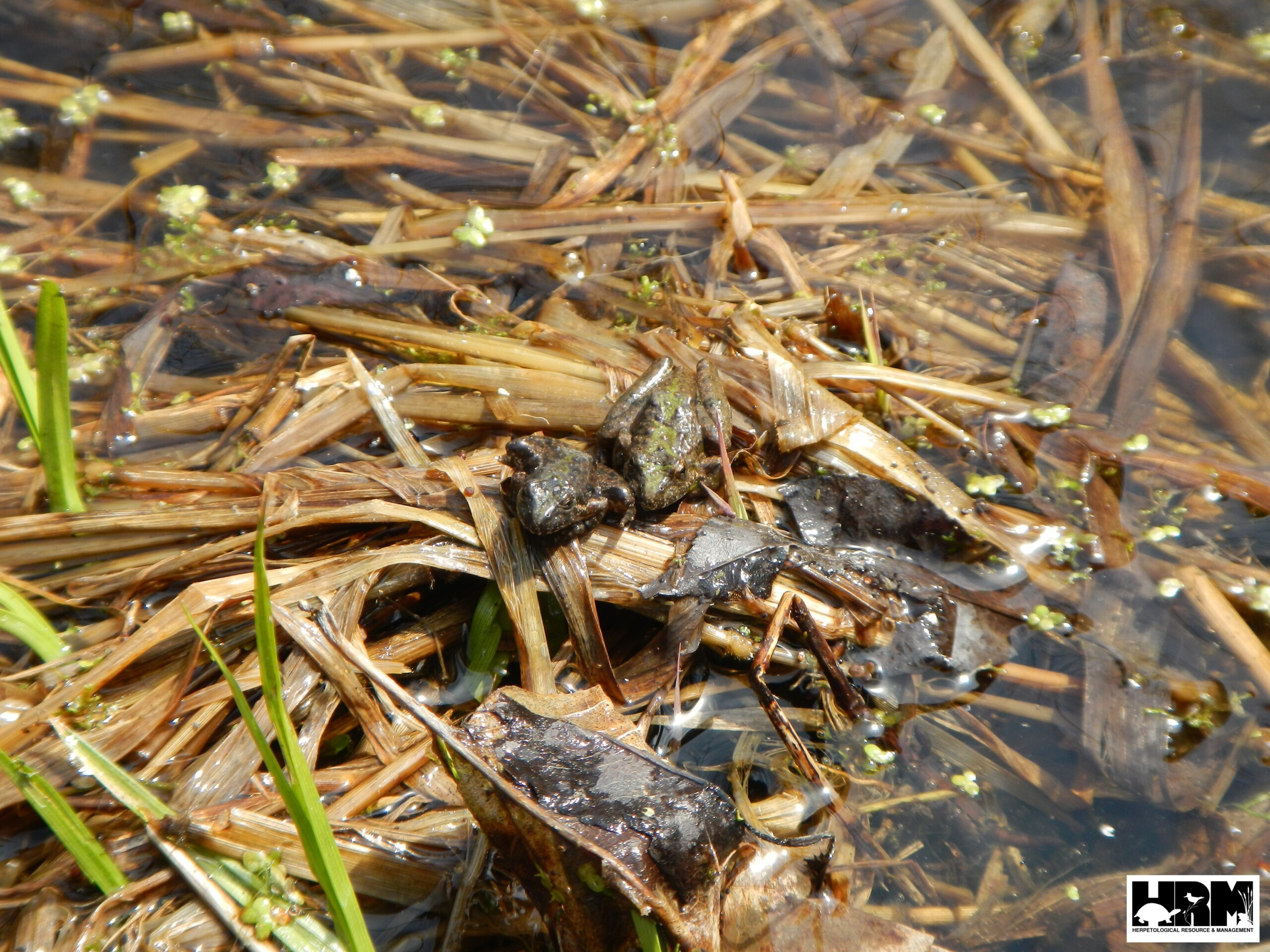
Inhabit the open edges of permanent ponds, bogs, lakes, and slow-moving streams and rivers. Occupy sparsely vegetated mud flats and muddy or sandy shorelines.
Conservation:
Extirpated from much of its historical range within Michigan, Blanchard cricket frog populations across the state continue to drastically decline. Contamination of wetlands by aquatic pollutants remains a major threat to the state threatened Blanchard’s Cricket Frog. These pollutants result in decreased water quality as well as accelerate the growth of aquatic vegetation. Preferring aquatic habitats with open or sparsely vegetated edges, the control of excess nutrients and chemical pollutants is essential to this species’ longevity.
Best Management:
Identify and protect quality Blanchard’s Cricket frog habitat containing extant populations. Control or intercept nutrient inputs from entering the aquatic systems. Avoid mechanical aquatic weed harvesting and prevent the introduction of exotic vegetation. Consider appropriately altering lake and river levels to manage for excess aquatic vegetation. Avoid disturbing riparian zones as well as adjacent terrestrial areas. If riparian harvest is necessary, maintain an understory and install temporary erosion control measures. Utilize a vegetated buffer zone between areas of chemical application and aquatic systems as well as intercept chemical runoff prior to reaching the system. If chemicals are used, apply during late summer and early fall. Provide egg laying structures by submerging finely brushed trees in breeding sites as well as ensure the presence of aquatic plant communities for larval foraging and cover. Create basking platforms by partially or fully submerging logs.
Adult Coloration:
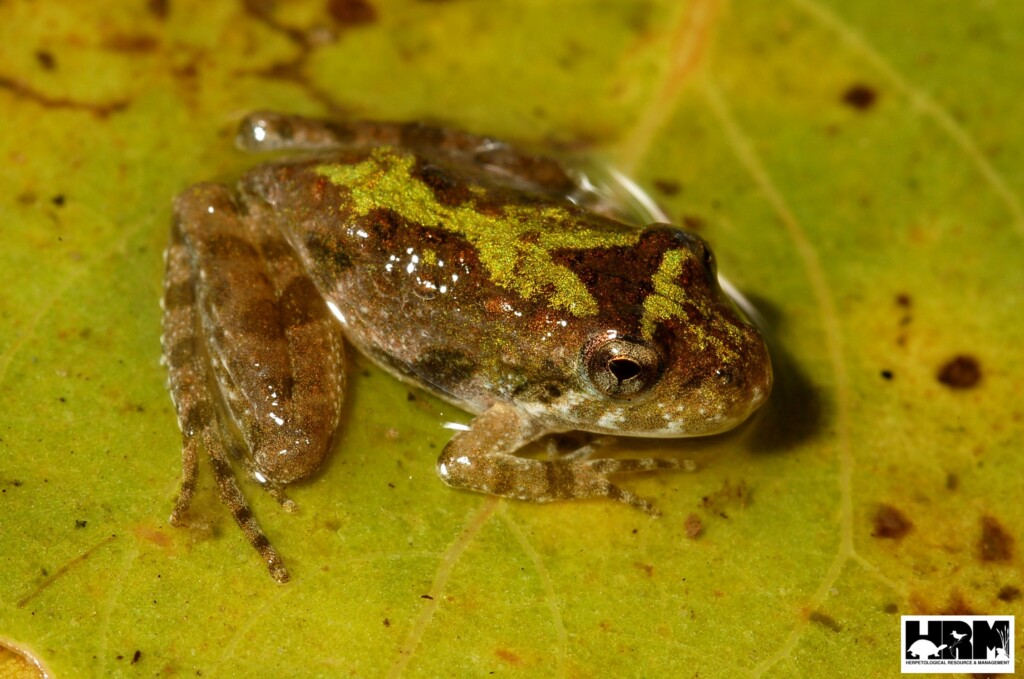
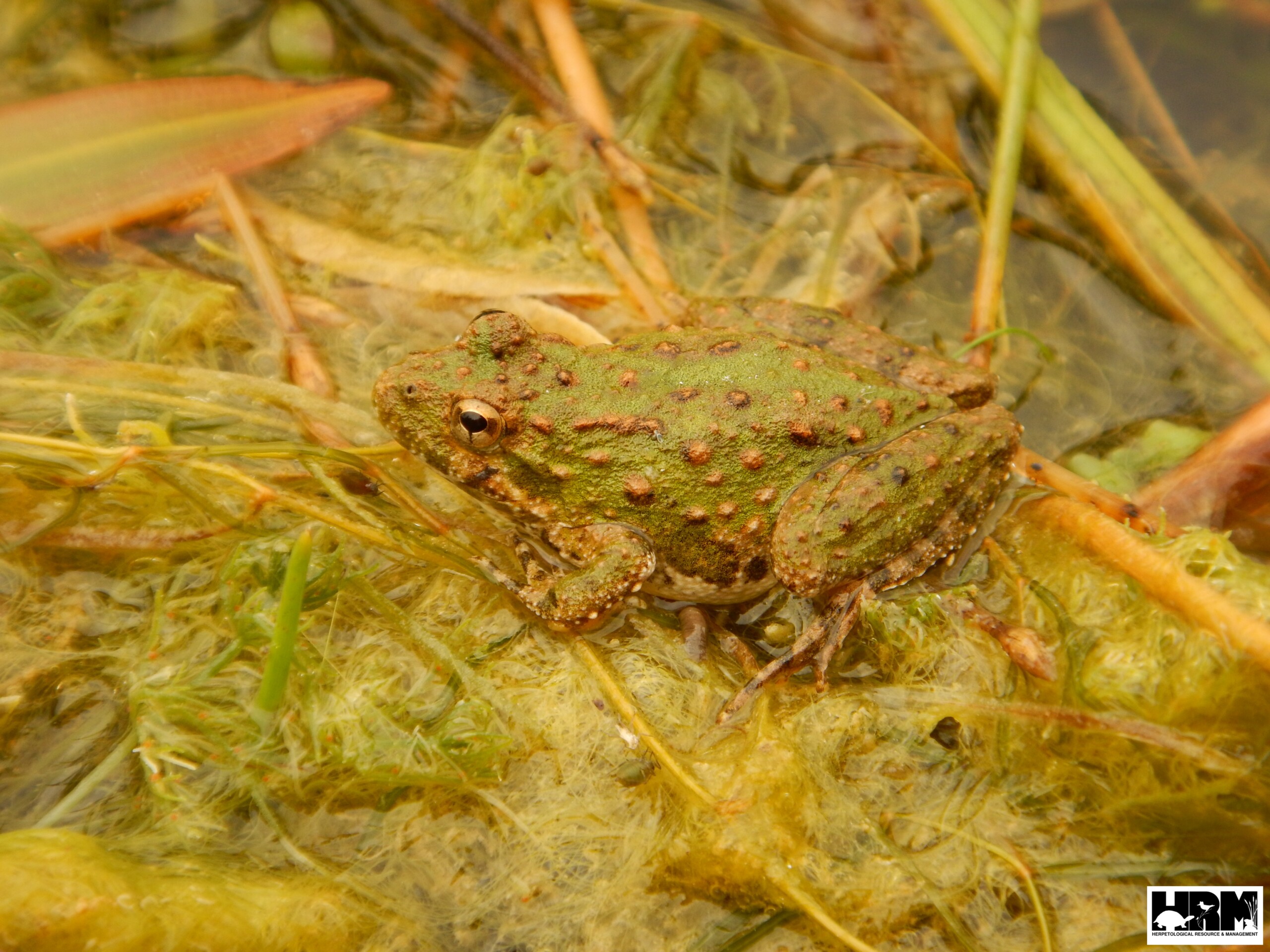
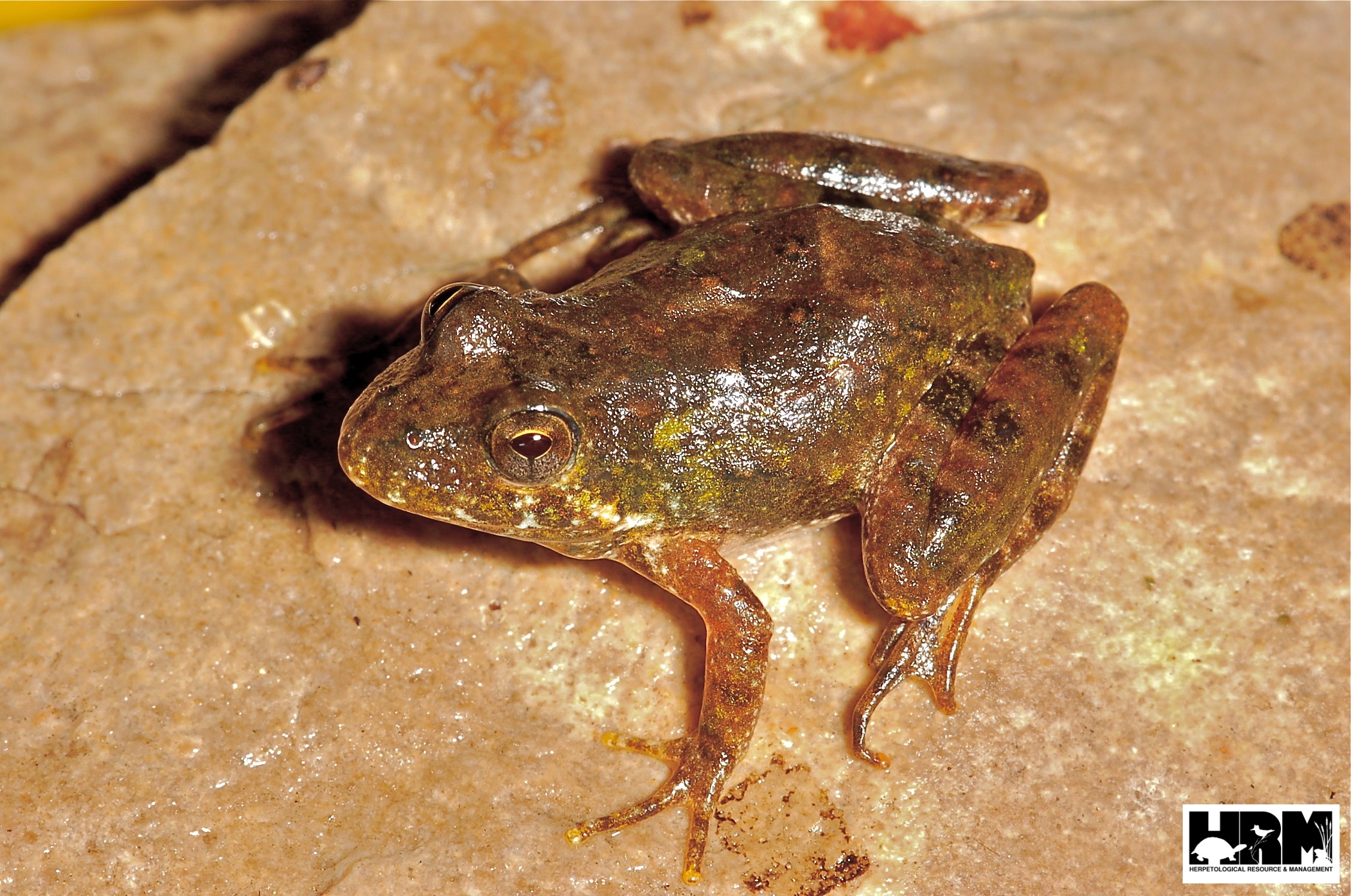
The back can be brown, tan, olive, or grey with occasional green, reddish or black blotches or sports with a light stripe down the back. Two light bars from the corner and edge of the jaw to the eye, has a dark triangle visible between the eyes. May be a dark stripe from the shoulder to the groin and another on the inner thigh and dark bars across the upper legs. The belly is whitish in color.
Adult Characteristics:
A very small and warty frog with long hind limbs and webbed hind toes. Toe tips are not obviously expanded. The about is blunt but pointed. Males have a slightly thickened pad on the inside of the thumb with a yellowish, grey-mottled vocal sac. Their call is a series of metallic sounding clicks and can last over 30 seconds. Begins slowly before increasing in tempo.
Mass: 1g
Typical lifespan in Wild: 2 years
Breeding Interval: Once annually
Breeding Season: May – July
Range number of offspring: 200 – 400 eggs
Range time to hatchling: 6 – 21 days
Range age at sexual/ reproductive maturity (female): 1 year
Range age at sexual/ reproductive maturity (male): 1 year
Diet: Blanchard’s Cricket Frogs primarily prey on algae and vegetation while undergoing metamorphosis, transitioning to insects, annelids, mollusks, and plant matter as adults.
Known Predator: Wolf Spider, Northern Water Snakes
Larvae Characteristics:
Tadpoles are elongated with olive to brownish coloration speckled with black and gold. Tail fins are narrow and tail has a conspicuous black tip.
Species Confused With:
The Northern Spring Peeper is similar in size and shape but have smoother skin and usually an X-shaped marking on the back.
Photos:
References:
- Harding, J and D. Mifsud. 2017. Amphibians and Reptiles of the Great Lakes Region: Revised Edition. Ann Arbor: The University of Michigan Press.
- Hudson, K. 2023. “Acris blanchardi” (On-line), Animal Diversity Web. Accessed February 10, 2025 at https://animaldiversity.org/accounts/Acris_blanchardi/
- Mifsud, David A., Sano, Melissa R., Seguchi, Kotaro J., 2026. Michigan Amphibian and Reptile Best Management Practices Third Edition. Herpetological Resource and Management Technical Publication 2026.