
Eastern Tiger Salamander
Overview:
Scientific Name: Ambystoma tigrinum
Size: 6.7 – 13” (adult size)
Status: Varies greatly in abundance throughout the Great Lakes range, larger populations presence where ideal breeding habitat is available, historically covered a larger range but has declined or been extirpated in some areas
MDNR Wildlife Action Plan Status: Species of Greatest Conservation Need
Habitat:
Occupy woodlands but are less dependent on closed canopy habitats compared to other Mole salamanders (Ambystoma spp.). Will inhabit open habitats such as marshes, grasslands, farmlands and suburban areas. Dependent on access to permanent and semi-permanent ponds for breeding, preferably those with an absence of fish.
Conservation:
Generally harmless to human interests. Considered undesirable in some fish hatcheries, large larvae may eat small fish, but fish also may feed on the larval salamanders. Often are seined for fish bait. Migrating salamanders are often killed crossing roadways. The draining and pollution of ponds, wetlands and the introduction of game fish are detriments to the species. The construction of stock ponds and ornamental garden pools can provide new breeding sites.
Best Management:
Consider the effects of altering or destroying vernal pools and other fish-free ponds. Do not impact the pool depression or core buffer area within 100 feet of the pools and aim to protect a wider buffer of 600 – 1000 feet around the pools. Try to maintain the forest canopy and any habitat corridors to other vernal pools and upland habitats, these landscape mosaics are important to the species. Crossing structures can help reduce the effects of habitat fragmentation by roadways. Application of rotenone should be done in the fall and winter when larvae have lost their gills and are out of the water or translocate larvae out of ponds that are to receive treatment.
Adult Coloration:
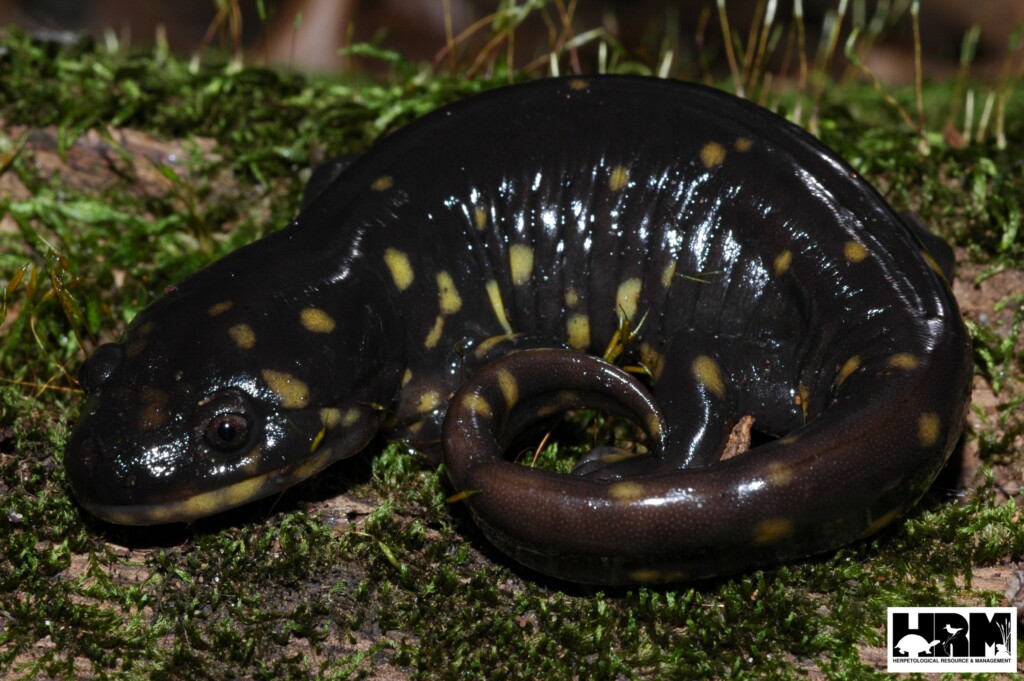
Black, grey, or brown bodies with irregular yellow, olive brown, or tan blotches and spots scattered across the head, back, tail, and sides. Irises are golden. The belly is yellow or olive-yellow with dark pigmentation but can occur as grey with yellow spots or streaks.
Adult Characteristics:
12-13 costal grooves (grooves between rib-like ridges that run down the sides of the body). Largest terrestrial salamander in Michigan. Adults are robust with large heads and a broad, rounded snout. Males are proportionally longer than females with more compressed tails and longer, thicker hind legs. Males have a very swollen vent during breeding season.
Juvenile Characteristics:
Metamorphs are usually greyish or greenish-brown with dull mottling that is lighter than the body. They develop yellow or tan spots with age which will gradually merge into the adult pattern.
Larvae Characteristics:
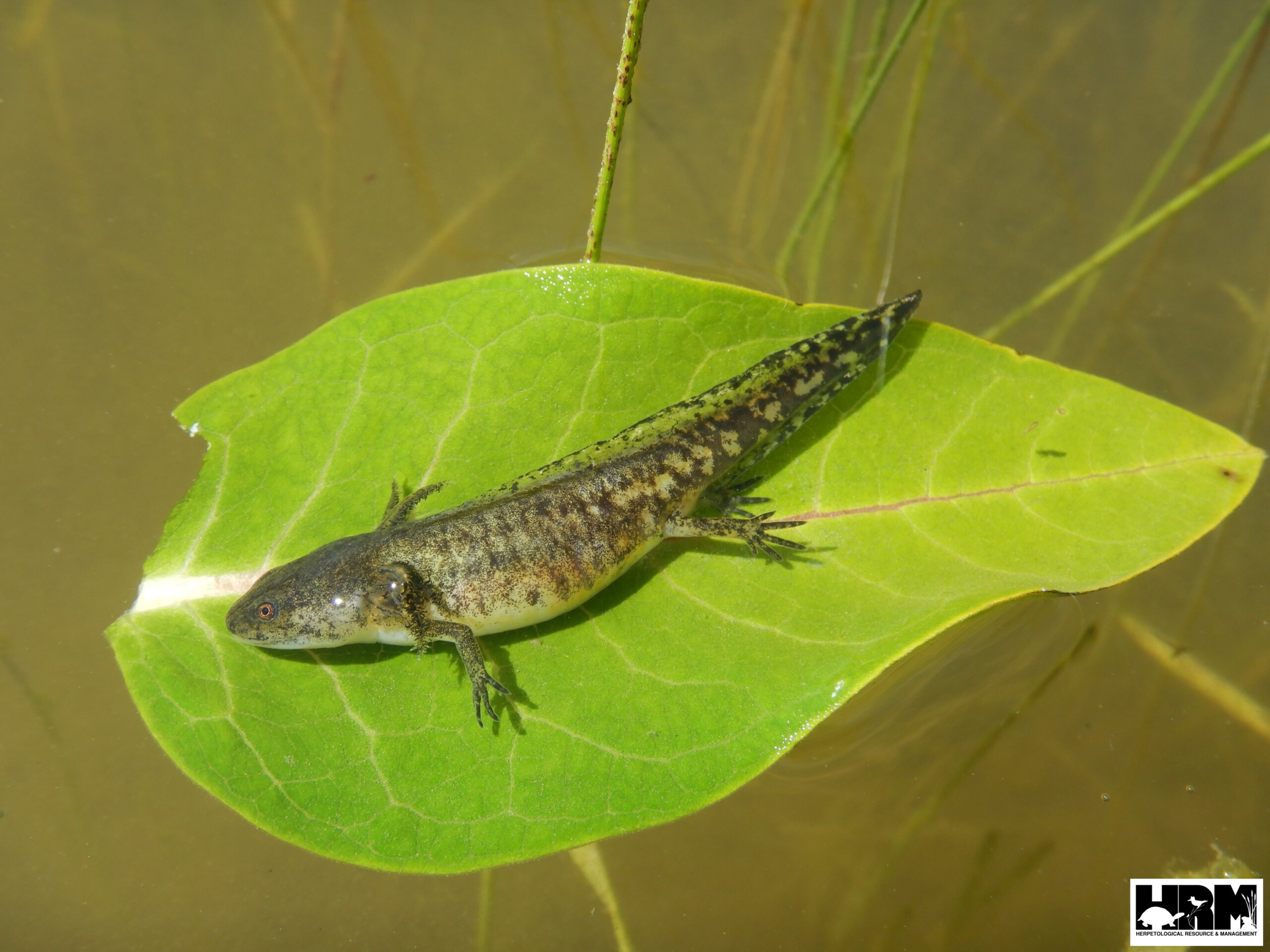
Can be yellowish-green or olive with darker blotches down the back with a light stripe down each side and a whitish belly. Can develop many black dots on the upper surfaces or darker pigmentation with light mottling on the tail and fins. Both have pointed toes and broad, flattened, rounded heads. Some populations develop cannibalistic forms which have larger heads, flattened snouts, and longer teeth compared to normal.
Species Confused With:
Spotted Salamanders have rounded yellow spots in two irregular rows as opposed to the randomly scattered streaks, spots and blotches seen in Tiger Salamanders.
Photos:
References:
- Amphibians and Reptiles of the Great Lakes Region by Jim Harding
- Conant, R., and Collins, J. T. 1998. Reptiles and Amphibians: Eastern, Central North America. Houghton Mifflin Harcourt Press.
- Harding, J and D. Mifsud. 2017. Amphibians and Reptiles of the Great Lakes Region: Revised Edition. Ann Arbor: The University of Michigan Press.
- Harding, J.H. and J.A. Holman. 1992. Michigan Frogs, Toads, and Salamanders. MSU Cooperative Extension Service and MSU Museum. Extension Bull. E-2350, 144 pp.
- Holman, J. A. 2012. The Amphibians and Reptiles of Michigan: A Quaternary and Recent Faunal Adventure. Detroit, Mich., Wayne State University Press.
- Mifsud, David A., Sano, Melissa R., Seguchi, Kotaro J., 2026. Michigan Amphibian and Reptile Best Management Practices Third Edition. Herpetological Resource and Management Technical Publication 2026
- Ruthven, A. G., H. B. T. Gaige, et al. 1912. The herpetology of Michigan, by Alexander B. Ruthven. Crystal Thompson and Helen Thompson; Memoranda towards a bibliography of the archaeology of Michigan, by Harlan I. Smith; prepared under the direction of Alexander G. Ruthven. Lansing, Mich., Wynkoop Hallenbeck Crawford, State Printers.