
Eastern Smooth Green Snake
Overview:
Scientific Name: Opheodrys vernalis
Size: 11.8 – 26” (adult total length)
Status: Locally present within the Great Lakes region, populations have declined significantly and there are some areas where they have been extirpated
Michigan State Status: Special Concern
MDNR Wildlife Action Plan Status: Species of Special Concern and Species of Greatest Conservation Need; Have experienced severe declines in many areas.
Habitat:
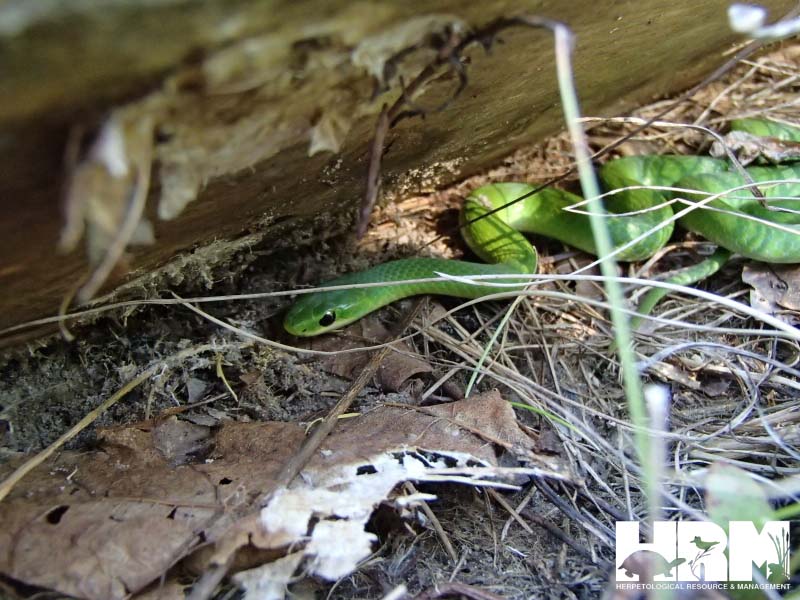
Inhabits moist grassy areas including prairies, savannas, meadows, old fields, pastures, roadsides, and the edge of marshes and lakes. Occur in open deciduous or pine woodlands and along woodland borders.
Conservation:
Historically once abundant throughout the lower peninsula of Michigan, the eastern smooth green snake’s distribution is now limited to scattered areas of the Northern Lower Peninsula as well as the Upper Peninsula. Destructive anthropogenic activities like deforestation can be attributed to this species’ extirpation from previously occupied areas on the landscape. This habitat loss caused by the conversion of forested areas to agricultural fields has resulted in a decline in eastern smooth green snake populations in Michigan and in turn, have been elevated to a species of special concern.
Best Management:
Identify and protect suitable eastern smooth green snake habitats containing extant populations. Heavily reduce or stop pesticide use because the eastern green snake’s diet comprises almost entirely of insects. Measures such as applying chemicals in late summer to early fall, applying chemicals to upland areas only during “dry-spells”, and utilizing alternative, low-toxicity substances and biocontrols would greatly benefit this species. Prevent habitat fragmentation and degradation; however, if harvest is necessary, harvest during late fall to early winter. Utilize various tree harvest techniques coupled with an appropriately timed cut rotation. Avoid clearcutting large expanses and use leftover coarse woody material to create simple habitat structures while also maintaining a litter layer and understory vegetation. Provide hibernacula structures by excavating a pit 8’ in depth and filling it with objects like rocks, logs, tubing, piping, and rubble. Cover the pit with soil while still allowing small openings to remain which act at access and exit points. Basking structures may also be provided by piling material like rocks or logs in sunny locations. If needed, supplemental cover objects may also be provided, either from naturally occurring material or artificially. Provide nesting structures if naturally occurring features are not present. If mowing is necessary, mow infrequently and during the hottest times of the year. Furthermore, set the mower deck high (>6”) to avoid wildlife on the ground or low (<2”) to discourage the movement of herpetofauna into specific areas. It’s important to note that wildlife clearance surveys must be conducted prior to any mowing operations in areas containing rare herpetofauna.
Adult Coloration:
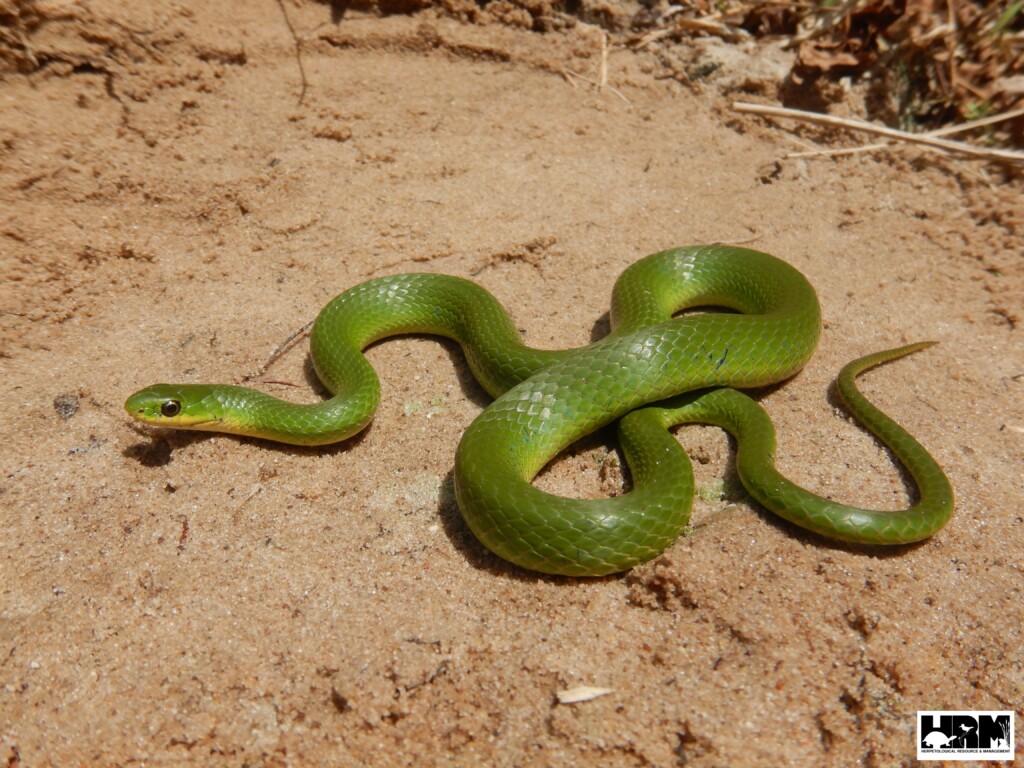
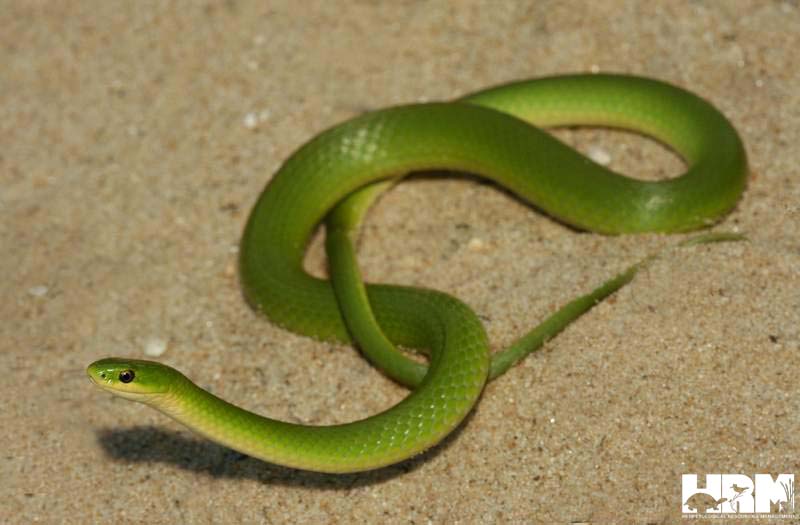
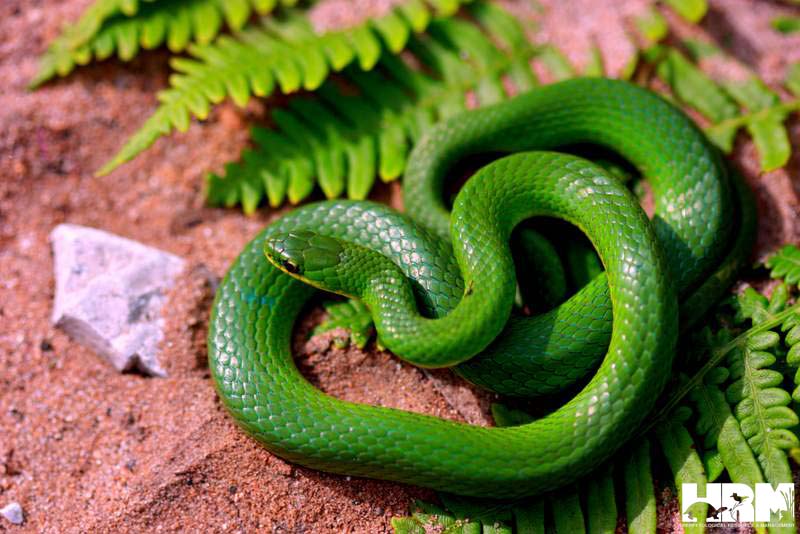
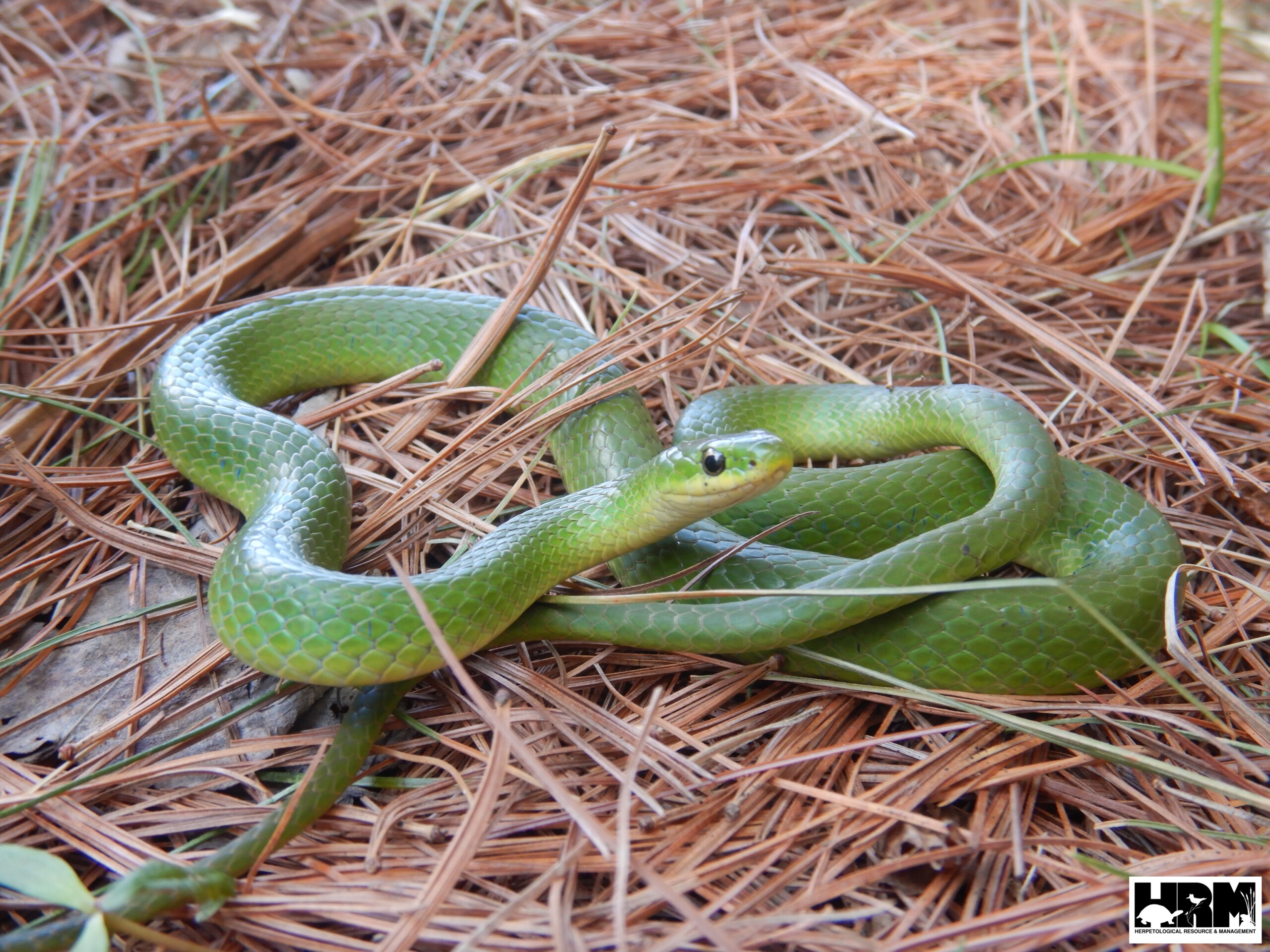
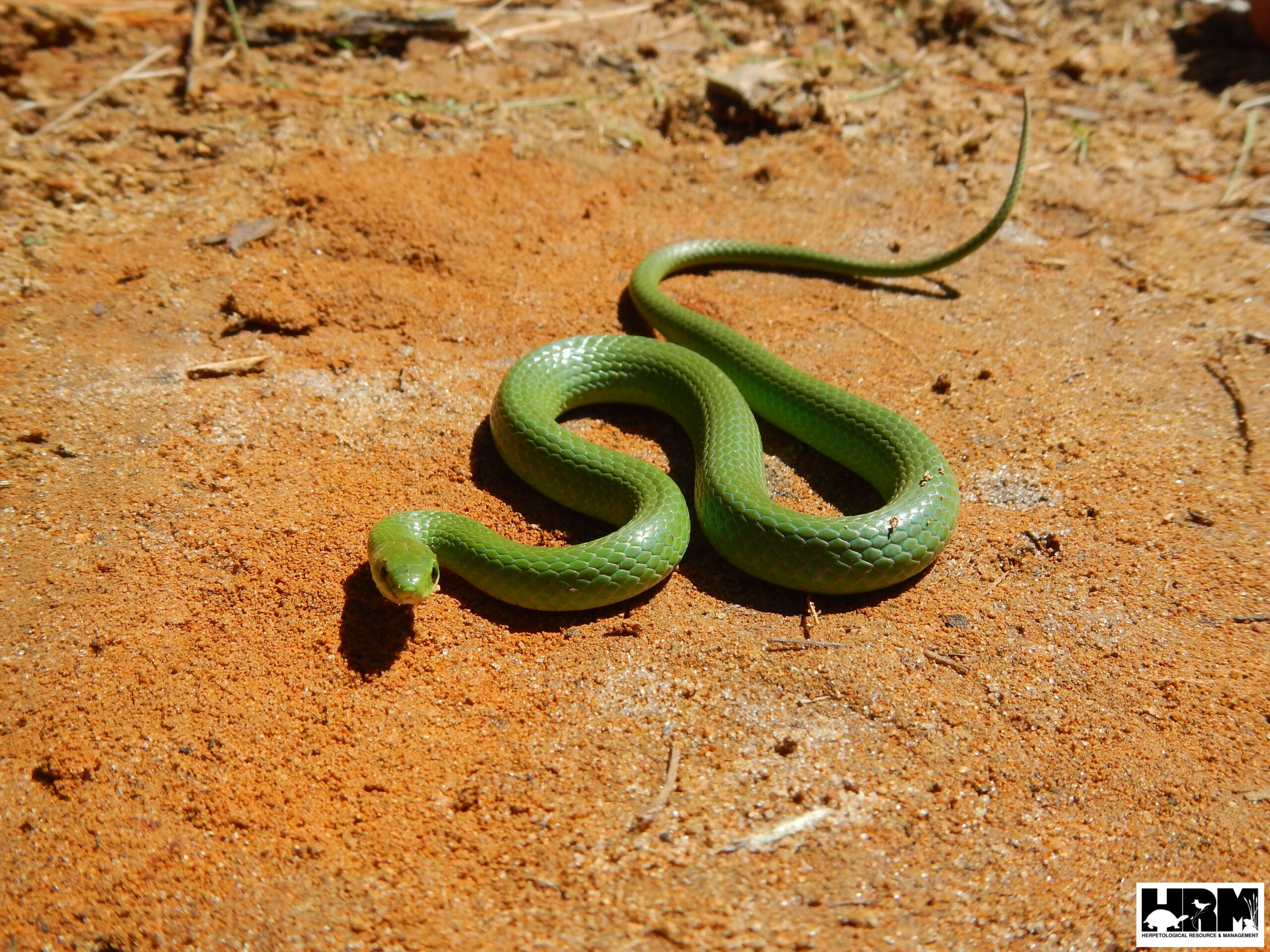
Entirely bright green with a white or pale-yellow belly. Yellowish or white coloration on the labial scales (those along the mouth), chin, and throat. Occasionally can be light brown, tan, or bronze instead of green.
Adult Characteristics:
A small slender snake with the head only slightly wider than the neck, unkeeled scales, and a divided anal plate. Males are smaller with longer tails than females.
Mass: 15.3 – 19.5 g
Typical lifespan in wild: 5 years
Breeding interval: once annually
Breeding season: June to September
Range number of offspring: 3 – 13
Range gestation period: 50 days
Average age at sexual/reproductive maturity (female): 2 years
Average age at sexual/reproductive maturity (male): 2 years
Diet: Insects like ants, moths, centipedes, spiders, slugs, and terrestrial worms.
Predators: Humans, Red-tailed Hawks, Great Blue Herons, Rough-legged Hawks, Black Bears, raccoons, Red Foxes, domestic cats, Milk Snakes
Juvenile Characteristics:
Newborns range from 3.25 to 6.5” in length. Hatchlings and juveniles tend to be duller in color compared to adults and may be olive green, brownish, or bluish-grey.
Scale Count:
15 scale rows at midbody
Species Confused With:
The only bright green snake in the region. The color fades to a pale–blue or grey after death which may cause confusion between the species and the Blue Racer, however a small Blue Racer would retain the juvenile pattern. Green Snakes that are browner in color can be distinguished by the unkeeled scales and uniform coloration.
Photos:
References:
- Amphibians and Reptiles of the Great Lakes Region by Jim Harding
- Conant, R., and Collins, J. T. 1998. Reptiles and Amphibians: Eastern, Central North America. Houghton Mifflin Harcourt Press.
- Harding, J and D. Mifsud. 2017. Amphibians and Reptiles of the Great Lakes Region: Revised Edition. Ann Arbor: The University of Michigan Press.
- Harding, J.H. and J.A. Holman. 2006. Michigan Snakes. MSU Extension Ext. Bulletin E-2000,74 pp. [revised].
- Holman, J. A. 2012. The Amphibians and Reptiles of Michigan: A Quaternary and Recent Faunal Adventure. Detroit, Mich., Wayne State University Press.
- Mifsud, David A., Sano, Melissa R., Seguchi, Kotaro J., 2026. Michigan Amphibian and Reptile Best Management Practices Third Edition. Herpetological Resource and Management Technical Publication 2026
- Ruthven, A. G., H. B. T. Gaige, et al. 1912. The herpetology of Michigan, by Alexander B. Ruthven. Crystal Thompson and Helen Thompson; Memoranda towards a bibliography of the archaeology of Michigan, by Harlan I. Smith; prepared under the direction of Alexander G. Ruthven. Lansing, Mich., Wynkoop Hallenbeck Crawford, State Printers.