
Northern Water Snake
Overview:
Scientific Name: Nerodia sipedon sipedon
Size: 24 – 55.3” (total adult length)
Status: Historically abundant throughout its range but has experienced population decline as a result of humans, can be locally present in some areas and extirpated in other areas of its range
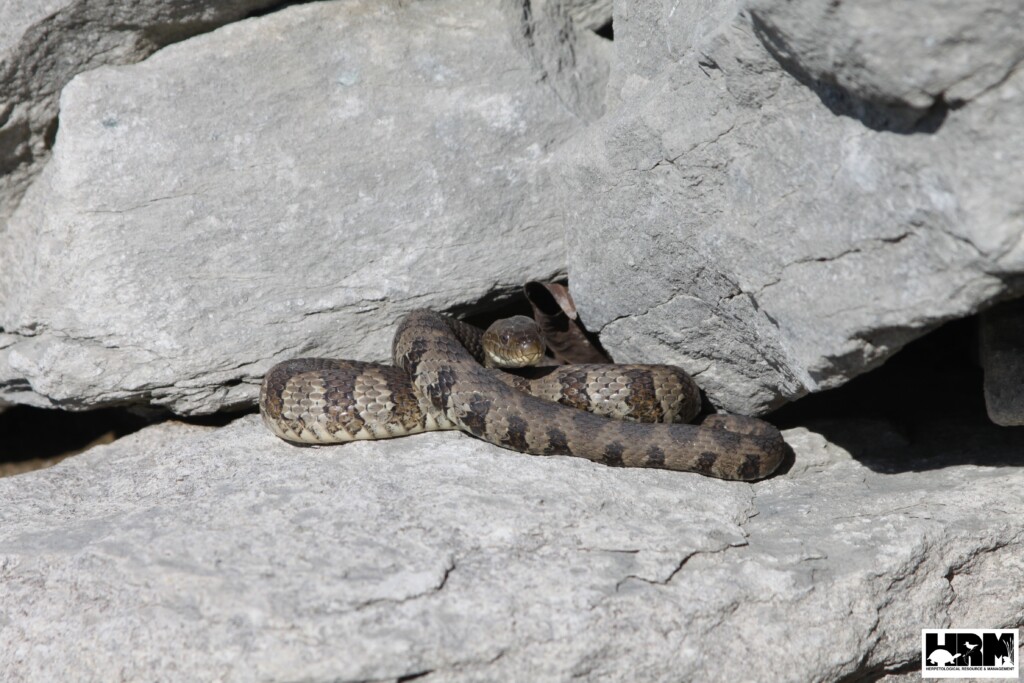
Habitat:
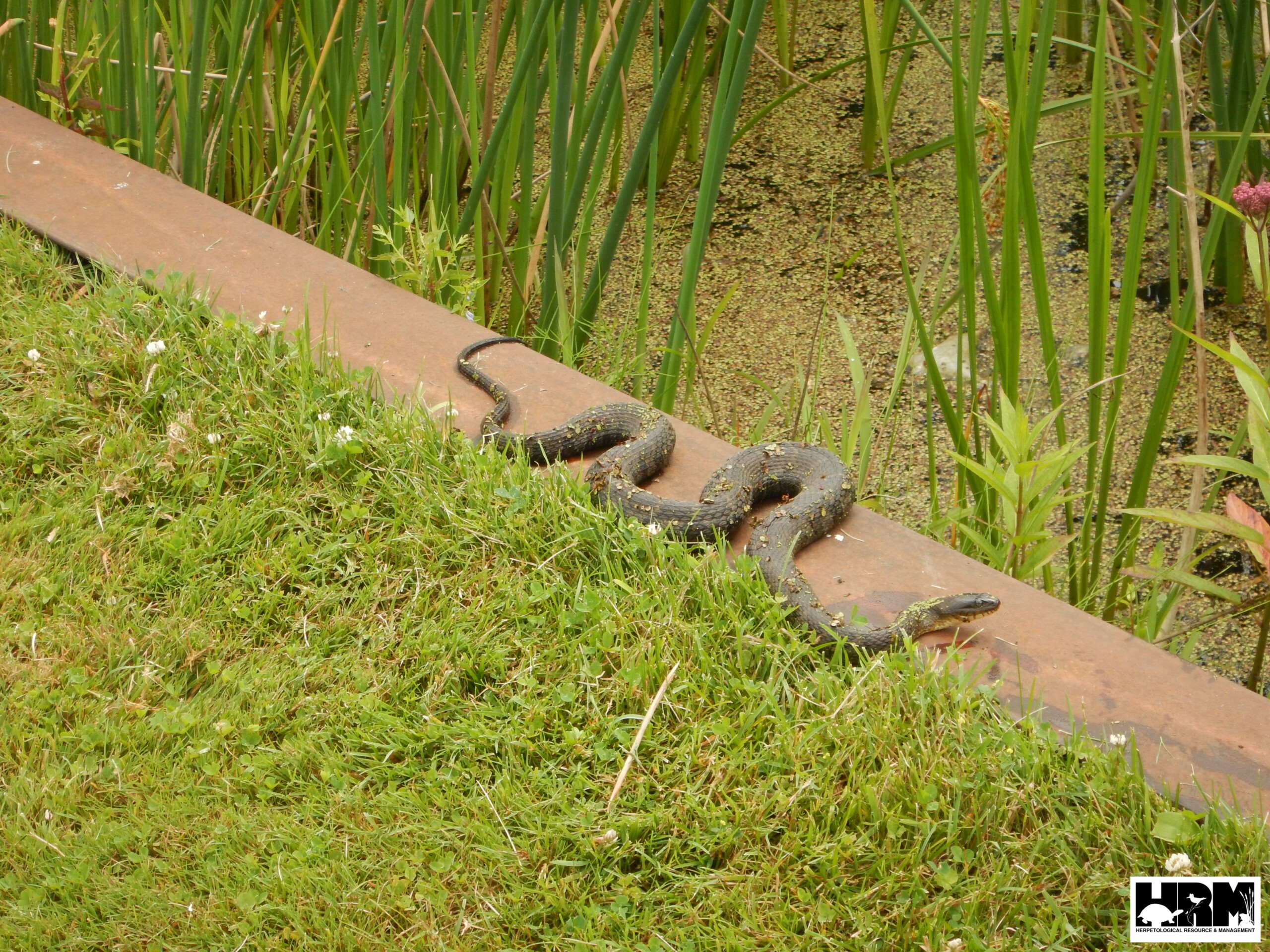
Inhabits permanent bodies of water such as rivers, streams, sloughs, lakes, ponds, bogs, marshes, swamps, and impoundments. Prefer open, sunny areas with ample cover and basking sites.
Conservation:
One of the most persecuted species of snake in the Great Lakes region out of fear, ignorance, or belief they reduce the number of game fish. They in fact do not affect sport fishing as they tend to eat smaller, slow-moving, or injured fish of less desirable species of fish. Can be problematic for fisheries or fish farms. Shoreline development has reduced their numbers as well.
Best Management:
The creation of habitat structures like basking logs, rocks and slabs can provide spots to rest and hide. Can provide natural invasive species control for round gobies. Consider the effects of altering or destroying vernal pools. Do not impact the pool depression or core buffer area within 100 feet of the pools and aim to protect a wider buffer of 600 – 1000 feet around the pools. Try to maintain any habitat corridors to other vernal pools and upland habitats.
Adult Coloration:
Tan, brown, or grey body color with a varied pattern of black, dark brown, or reddish-brown crossbands and blotches on the sides and back. Complete crossbands are generally on the front third of the body before breaking up into dark saddles and side blotches toward the tail. Dark pigment may obscure the pattern in older individuals which may appear as solid brown or black. The belly is white, yellowish, or orangish with a pattern of reddish-brown half-moon marks with greyish or brownish speckling between.
Adult Characteristics:
Moderately large snake with keeled scales (each scale has a small central ridge) and a divided anal plate. Males are smaller than females and have longer tails.
Juvenile Characteristics:
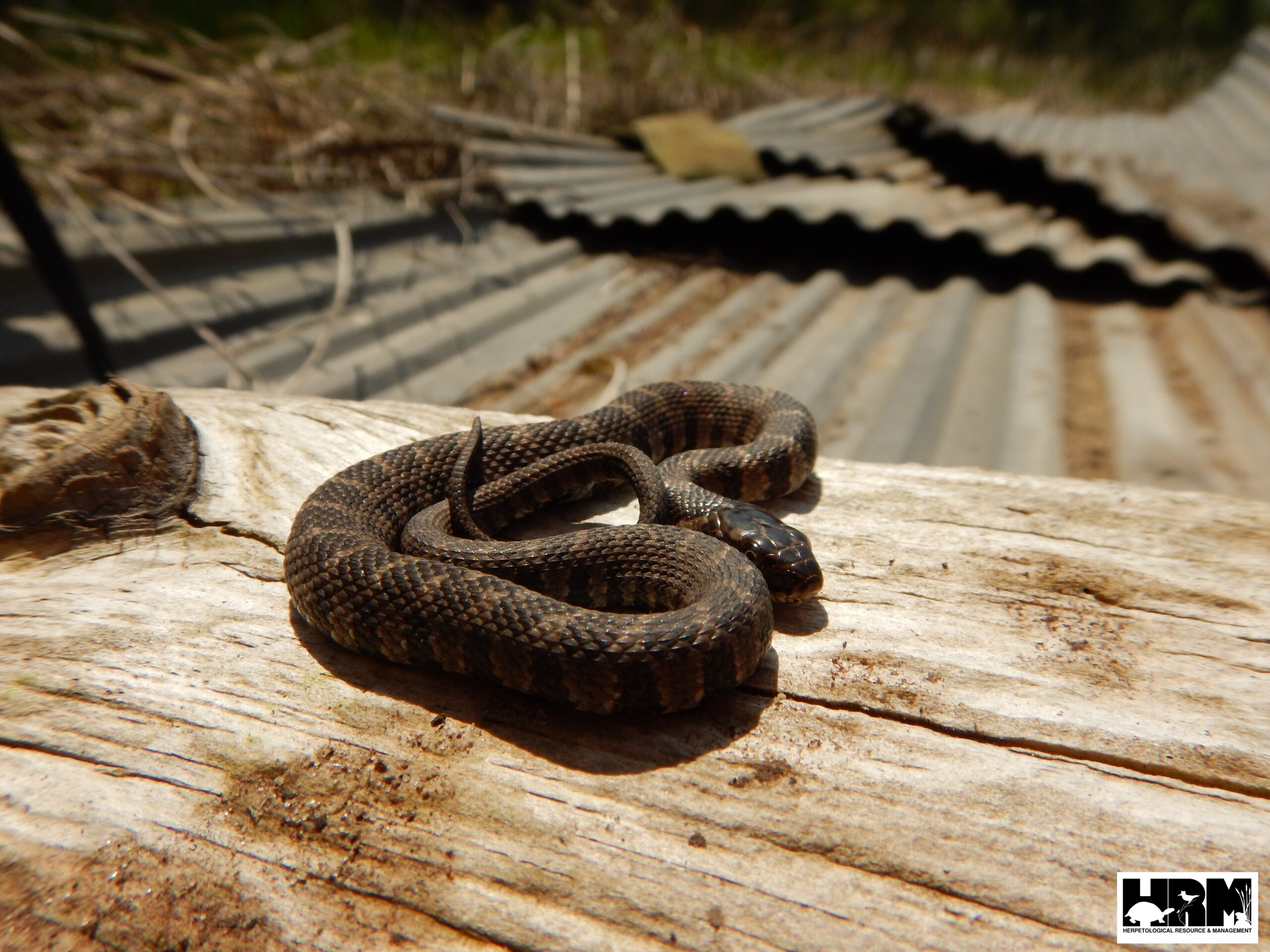
Newborns may be 7.5 – 10.6” in length and are more distinctly patterned than adults with black or reddish-brown bands and blotches on a greyish or tan body.
Scale Count:
21 to 25 scale rows at midbody
Species Confused With:
The Copper-bellied Water Snake has a plain red or orange belly with dark brown or black along the edges. Kirtland’s Snake has a pink or red belly with a row of black spots down each side. Garter and Ribbon Snakes have lengthwise stripes down the back and an undivided anal plate. The Eastern Milk Snake has a black and white checkerboard belly pattern, smooth (unkeeled) scales, and a single anal plate.
Photos:
References:
- Amphibians and Reptiles of the Great Lakes Region by Jim Harding
- Conant, R., and Collins, J. T. 1998. Reptiles and Amphibians: Eastern, Central North America. Houghton Mifflin Harcourt Press.
- Harding, J and D. Mifsud. 2017. Amphibians and Reptiles of the Great Lakes Region: Revised Edition. Ann Arbor: The University of Michigan Press.
- Harding, J.H. and J.A. Holman. 2006. Michigan Snakes. MSU Extension Ext. Bulletin E-2000,74 pp. [revised].
- Holman, J. A. 2012. The Amphibians and Reptiles of Michigan: A Quaternary and Recent Faunal Adventure. Detroit, Mich., Wayne State University Press.
- Mifsud, David A., Sano, Melissa R., Seguchi, Kotaro J., 2026. Michigan Amphibian and Reptile Best Management Practices Third Edition. Herpetological Resource and Management Technical Publication 2026
- Ruthven, A. G., H. B. T. Gaige, et al. 1912. The herpetology of Michigan, by Alexander B. Ruthven. Crystal Thompson and Helen Thompson; Memoranda towards a bibliography of the archaeology of Michigan, by Harlan I. Smith; prepared under the direction of Alexander G. Ruthven. Lansing, Mich., Wynkoop Hallenbeck Crawford, State Printers.