
Butler’s Garter Snake
Overview:
Scientific Name: Thamnophis butleri
Size: 15 – 29” (adult total length)
Status: Can be locally present when their preferred habitat is present but distribution can be erratic as a result of humans manipulating and changing the landscape
Michigan State Status: Special Concern
MDNR Wildlife Action Plan Status: Species of Greatest Conservation Need
Habitat:
Inhabits wet meadows and prairies, on the borders of marshy ponds and lakes and other moist grassy areas. Will inhabit vacant urban and suburban areas.
Conservation:
The Butler’s Garter Snake’s distribution is extremely limited to mostly the Southern Great Lakes region which puts them at increased risk of extirpation. Small populations occur throughout eastern and southern Michigan and can even be locally abundant. Despite this, increasing anthropogenic influences such as the development of wetland meadows as well as other landscape alterations pose serious threats to the Butlers garter snake. This species is also particularly at risk from other factors like road development, persecution, predation, and snake fungal disease which also contribute to their population declines.
Best Management:
Identify and protect quality Butler’s garter snake habitat containing extant populations. Avoid intense development of wet meadow habitat. If landscape requires alteration use tracked vehicles on construction mats or logging roads placed in low impact areas. Reduce the use of vehicles off road and only utilize heavy equipment during cold winter months when the ground is frozen and during peak herpetofauna inactivity. Avoid use of pesticides by implementing alternative strategies to prevent the need for chemicals. Consider the use of alternative, low-toxicity substances and biocontrol’s. If completely necessary, apply chemicals sparingly and during late summer and fall. Apply chemicals to upland areas during times of “dry-spells”. If roads are being developed near suitable habitat, consider installing wildlife barrier fencing or crossing structures to reduce road mortality. Predators should be regulated for overpopulation and proper decontamination protocols should be adhered to prevent the introduction of snake fungal disease to novel populations. Education and outreach should be implemented to prevent unnecessary killings. If mowing is required, mow infrequently and during the hottest times of the year. Additionally, either set the mowing decks high (>6”) to avoid wildlife on the ground or low (<2”) to discourage the movement of herpetofauna within mowed areas. It’s important to note that wildlife clearance surveys must be conducted prior to any mowing operations in areas containing rare herpetofauna. Provide nesting structures if naturally occurring features are not present. Provide supplemental snake hibernacula structures by excavating a pit to a depth of 8’ and fill the pit with objects such as rocks, logs, tubing, pipes, and rubble before covering it with soil. Ensure and entry and exit are available to and from the hibernacula. Provide snake basking areas by placing rocks or logs in piles in sunny areas while ensuring the material is arranged in a manner that allows for cracks and gaps to act as cover.
Adult Coloration:
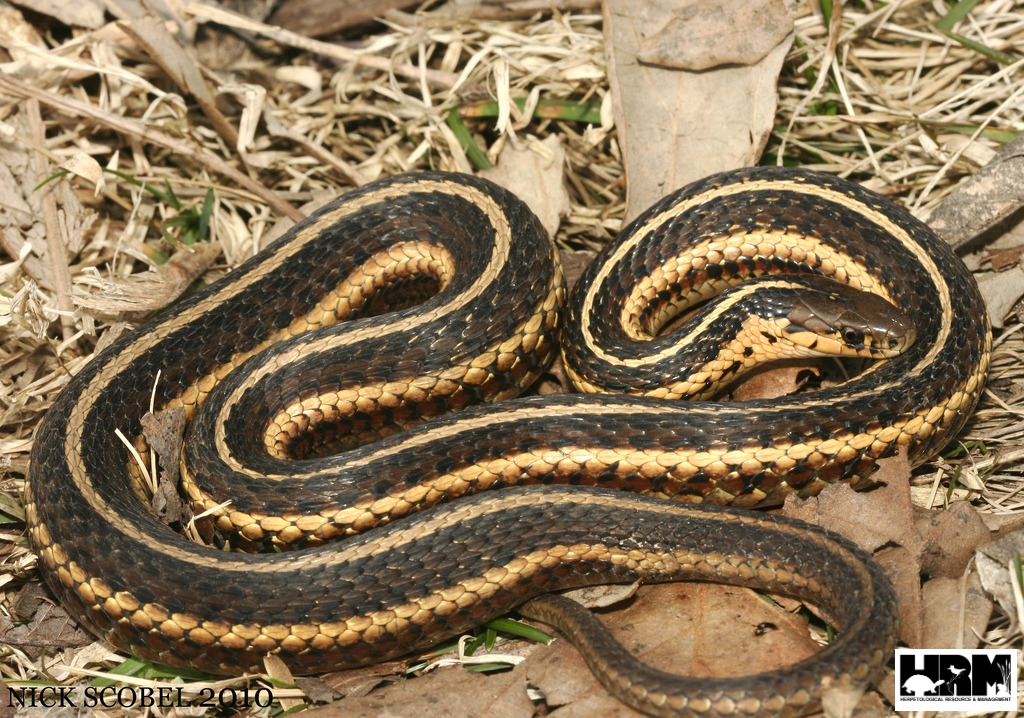
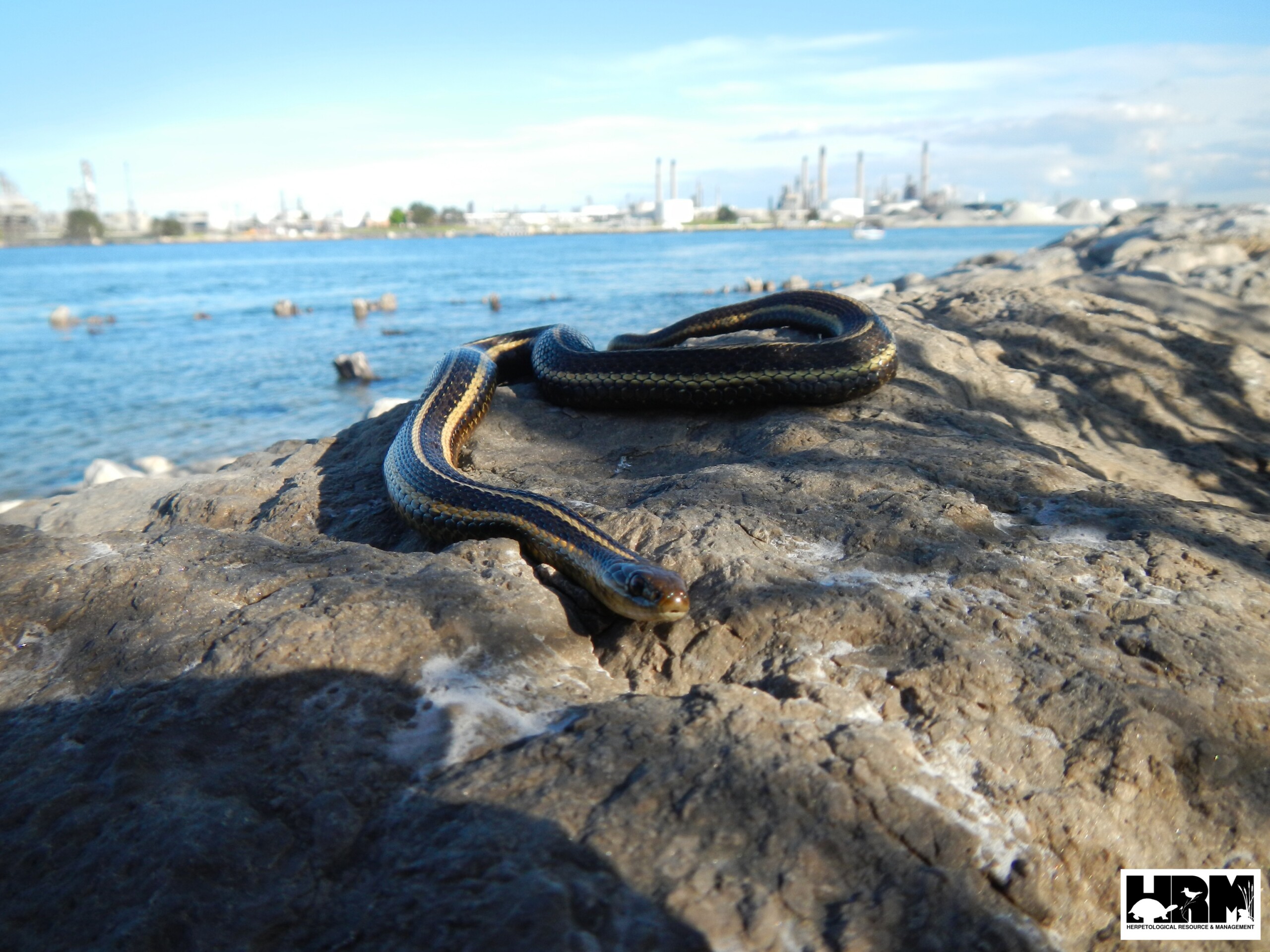
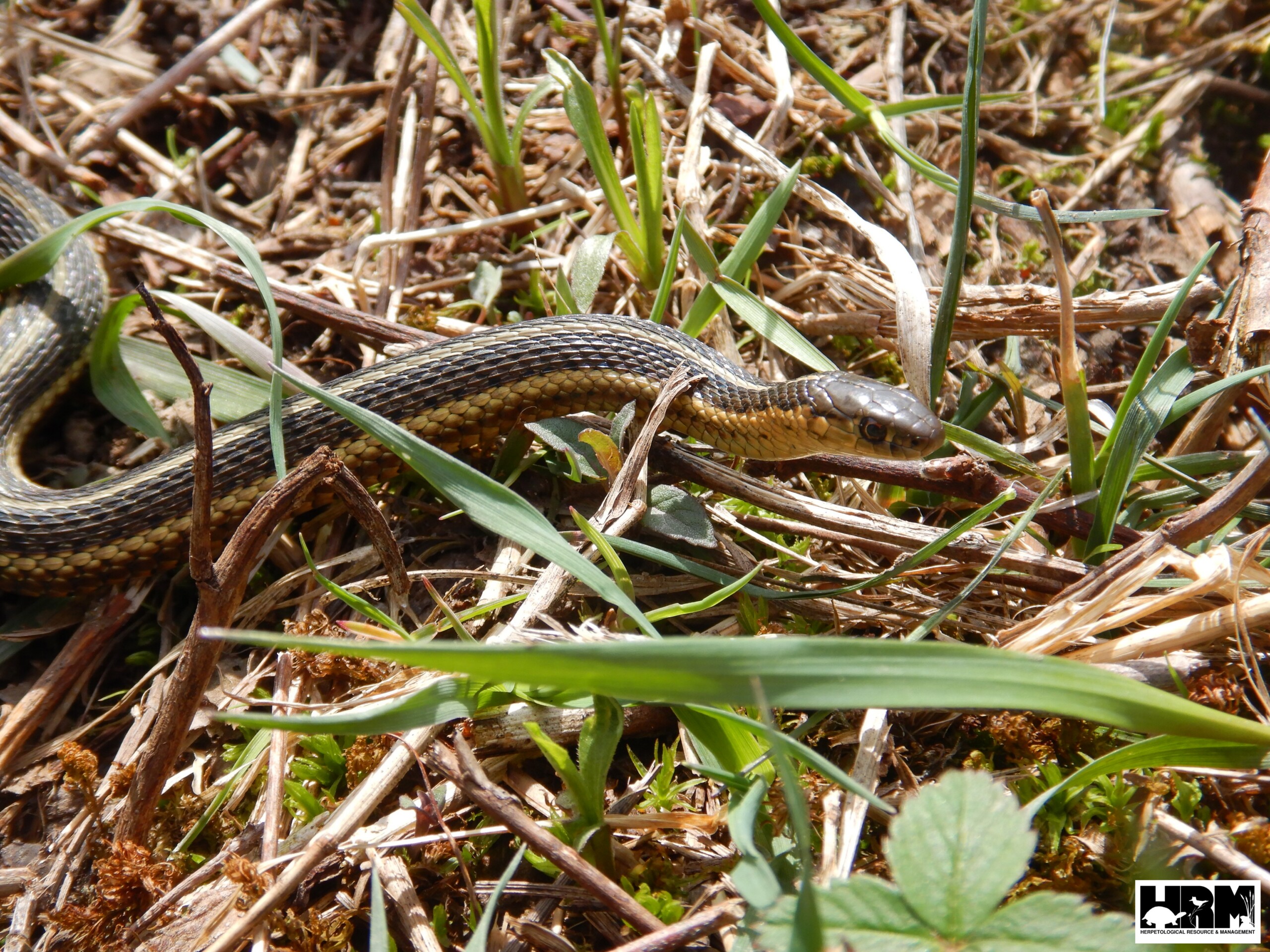
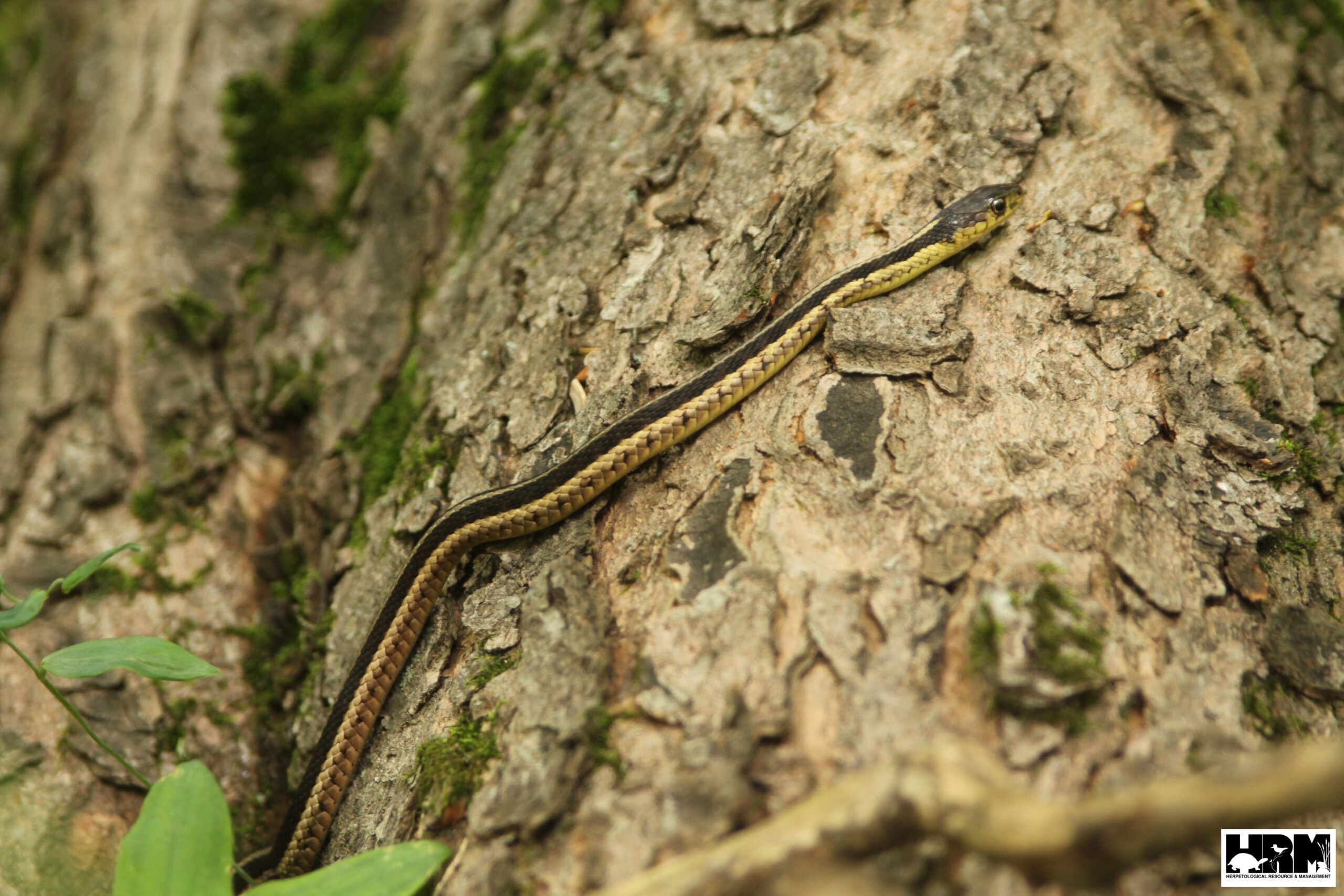
A black, brown, or olive-brown body with three distinct yellow or orange strips occasionally with two rows of dark spots between the stripes. The stripes on the side run on scale row 3 and the adjacent halves of scale rows 2 and 4. The head is black or olive often with two small yellow spots on the large scales at the back of the head. The labial scales (along the mouth) are yellow and may have brown shading or speckles. The belly is a pale green or greenish-yellow edged with brown and dark spots along the edges.
Adult Characteristics:
A rather small and stout snake with keeled scales (each scale has a small central ridge) and a single (undivided) anal plate. The head is the same size or barely wider than the neck. Males are smaller and slenderer with longer tails than females.
Typical lifespan in wild: 6 – 10 years in captivity
Breeding interval: once annually (delayed fertilization)
Breeding season: March to April
Range number of offspring: 4 – 20
Average number of offspring: 12
Average age at sexual/reproductive maturity (females): 2 – 3 years
Average age at sexual/reproductive maturity (male): 2 – 3 years
Diet: earthworms, leeches, small frogs, and salamanders
Predators: Milk Snakes, American Crow, hawks, owls, raccoons, Striped Skunks, weasels, shrews, Red Foxes, and domestic cats
Juvenile Characteristics:
Newborns range from 5 – 7.3” in length with the same coloration as adults but with proportionally larger heads.
Scale Count:
19 scale rows at midbody
Species Confused With:
Ribbon Snakes and Garter Snakes have relatively larger, longer heads. Eastern Garter Snakes have side stripes on scale rows 2 and 3.
Photos:
References:
- Amphibians and Reptiles of the Great Lakes Region by Jim Harding
- Conant, R., and Collins, J. T. 1998. Reptiles and Amphibians: Eastern, Central North America. Houghton Mifflin Harcourt Press.
- Harding, J and D. Mifsud. 2017. Amphibians and Reptiles of the Great Lakes Region: Revised Edition. Ann Arbor: The University of Michigan Press.
- Harding, J.H. and J.A. Holman. 2006. Michigan Snakes. MSU Extension Ext. Bulletin E-2000,74 pp. [revised].
- Holman, J. A. 2012. The Amphibians and Reptiles of Michigan: A Quaternary and Recent Faunal Adventure. Detroit, Mich., Wayne State University Press.
- Mifsud, David A., Sano, Melissa R., Seguchi, Kotaro J., 2026. Michigan Amphibian and Reptile Best Management Practices Third Edition. Herpetological Resource and Management Technical Publication 2026
- Ruthven, A. G., H. B. T. Gaige, et al. 1912. The herpetology of Michigan, by Alexander B. Ruthven. Crystal Thompson and Helen Thompson; Memoranda towards a bibliography of the archaeology of Michigan, by Harlan I. Smith; prepared under the direction of Alexander G. Ruthven. Lansing, Mich., Wynkoop Hallenbeck Crawford, State Printers.