
Northern Spring Peeper
Overview:
Scientific Name: Pseudacris crucifer
Size: 0.8 – 1.5” (adult size)
Status: Locally abundant, persist in a variety of different habitats
Habitat:
Inhabit temporary and permanent ponds, marshes, flooded areas, and ditches during the breeding season after which they disperse into woodlands, old fields, and shrubby areas.
Conservation:
While the species is widespread and locally abundant, many populations have been reduced or eliminated by draining small wetlands and conversion of habitat to urban, suburban, agricultural development. While many states and local governments have protections on wetlands, small temporary wetlands and adjacent upland habitats that are still critical to the species receive little attention.
Best Management:
Consider the effects of altering or destroying vernal pools and other fish-free ponds. Do not impact the pool depression or core buffer area within 100 feet of the pools and aim to protect a wider buffer of 600 – 1000 feet around the pools. Try to maintain the forest canopy. Minimize the spread of salt on roadways near wetlands which can reduce the survival of pollution sensitive species.
Adult Coloration:
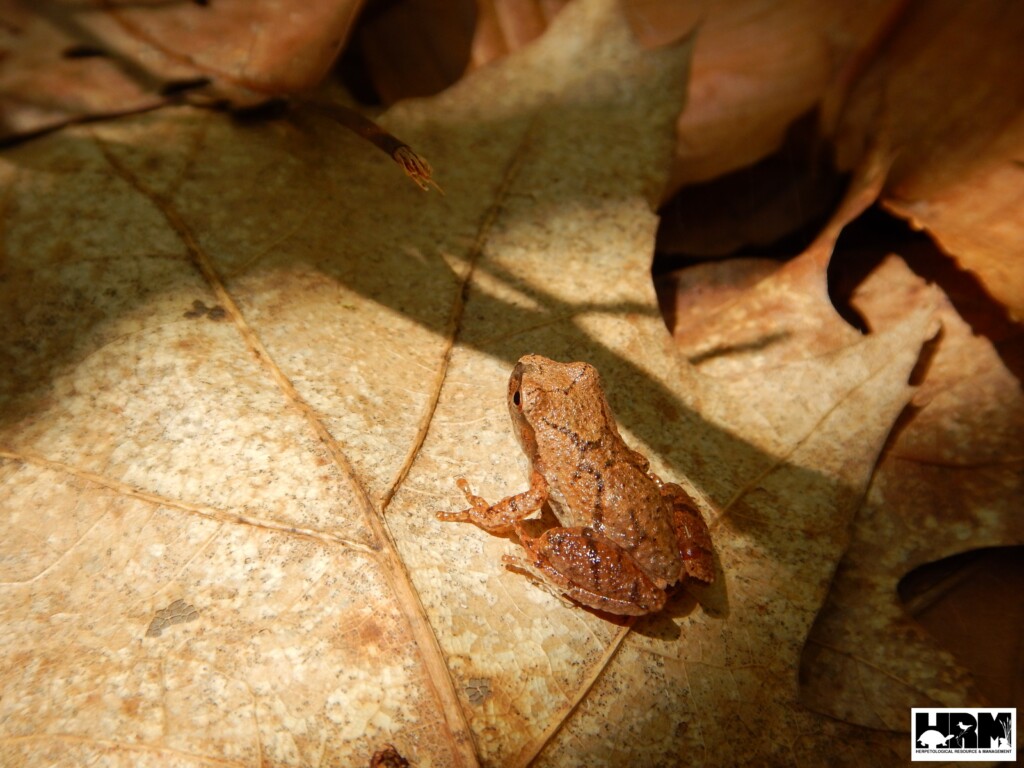
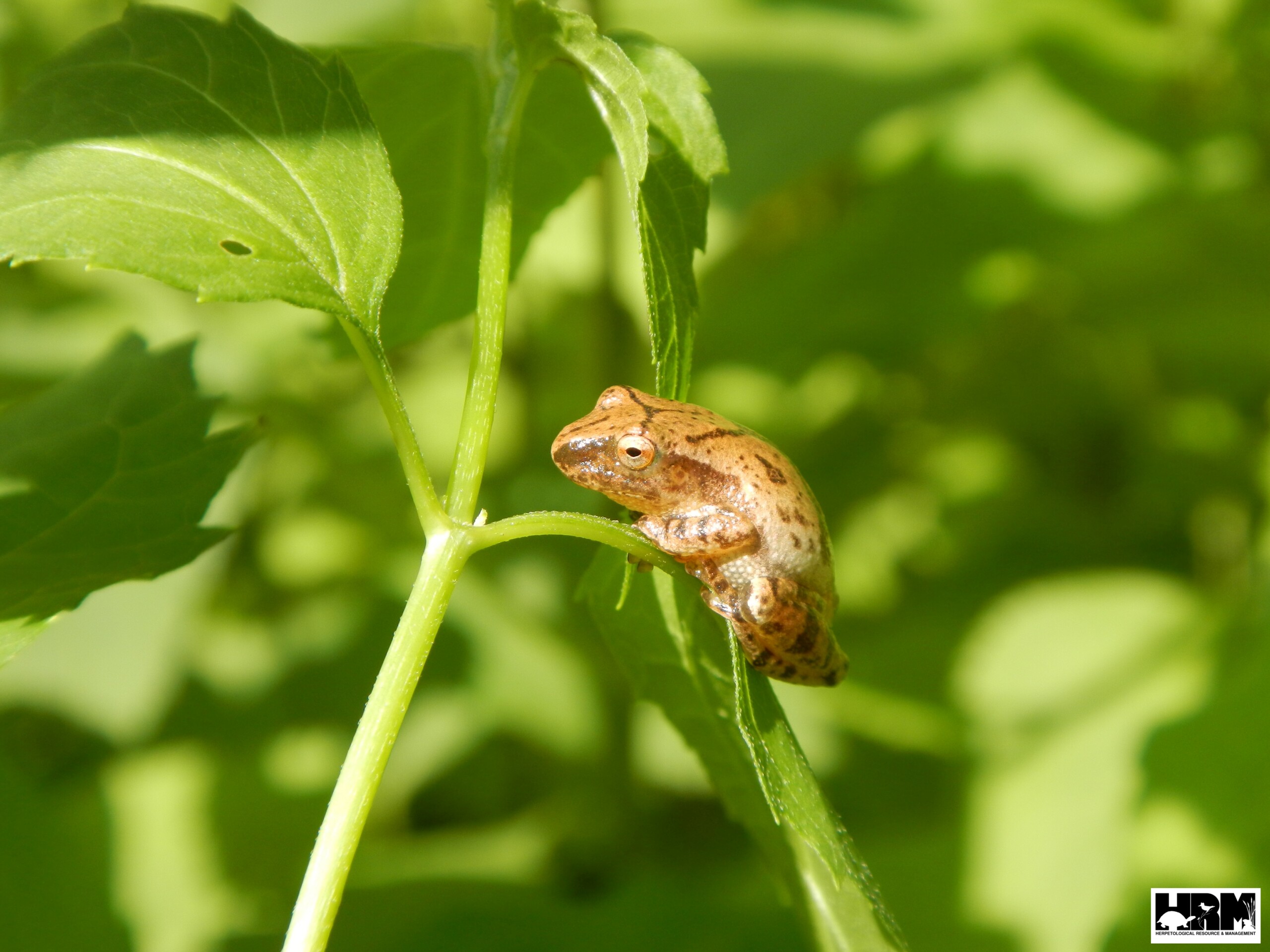
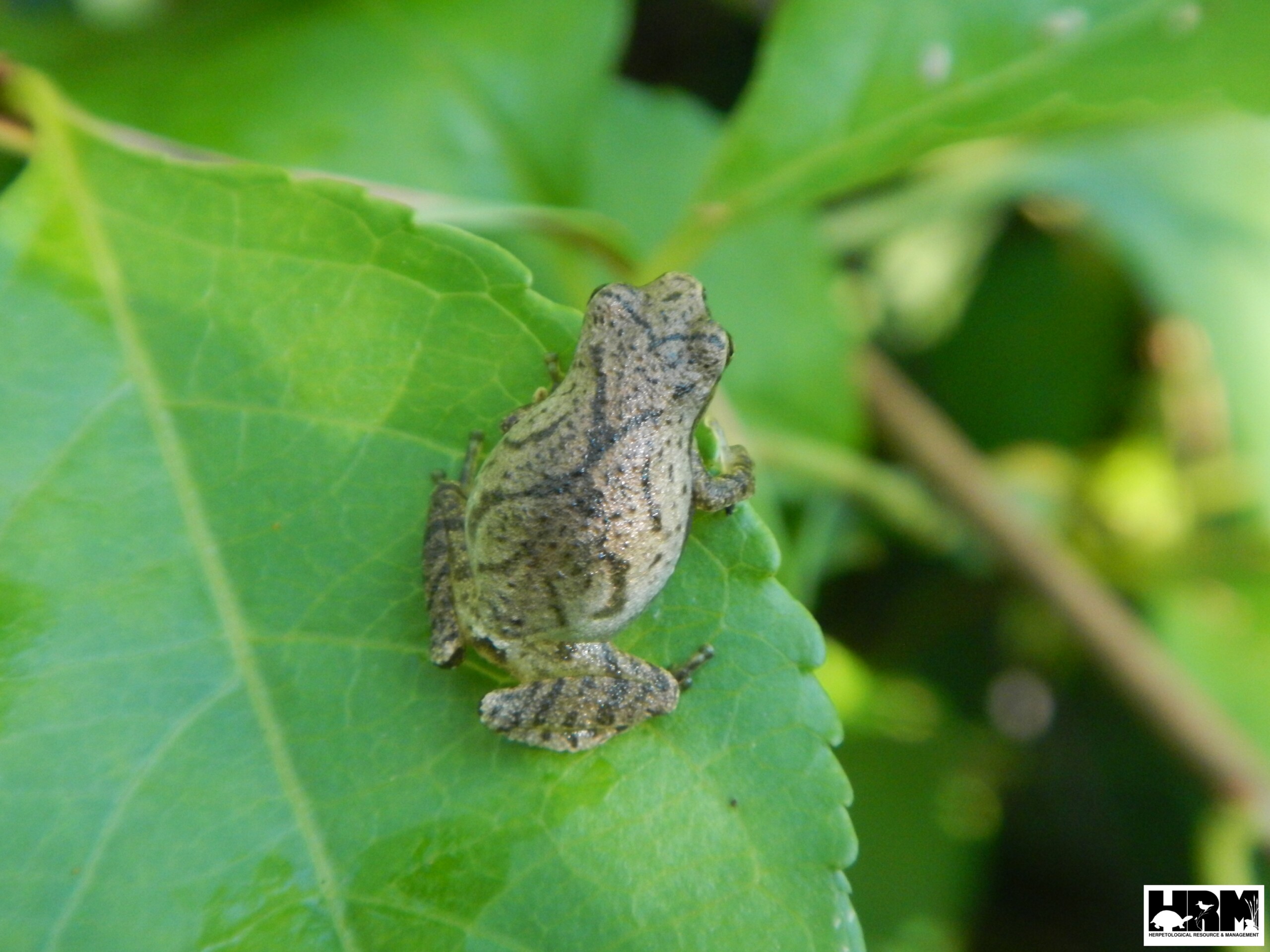
Brown, tan or grey bodies with an X-shaped mark on the back. A narrow, V-shaped mark is found between the eyes and a dark stripe runs from the nostril through the eyes to the tympanum (circular “ear” structure on the side of the head) sometimes down the side of the body. The belly is white, yellowish, or cream colored. The upper surface of the legs have crossbars and the undersides of the hind legs and groin nay be yellowish or pinkish.
Adult Characteristics:
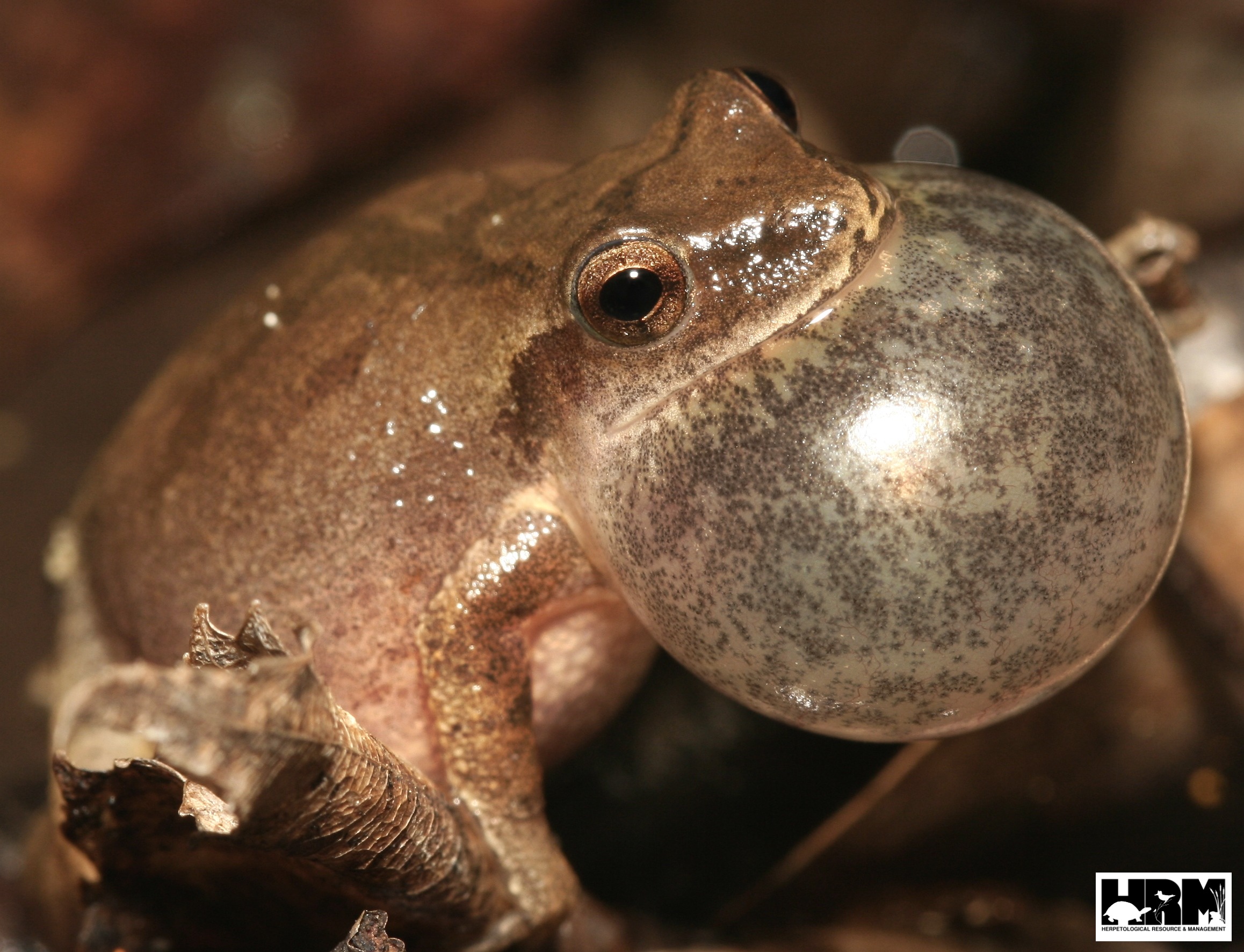
Slightly expanded pads on toe tips. Males are slightly smaller and dark than females. During breeding season, the vocal sac is visible as a mottled brownish or greenish area of loose skin on the throat. Call is a high-pitched, quick “peep” about once per second. May also voice a low-pitched whistle as a territorial response to another encroaching male.
Larvae Characteristics:
Tadpoles are brown or green with gold flecks on the back. The belly is lighter and iridescent. Tail fins are clear or orangish with black or purple blotches on the edges.
Species Confused With:
Chorus Frogs lack the X-pattern mark and instead have dark stripes running down the back. Cricket Frogs have rougher skin and a dark stripe on the inner thigh of the hind legs.
Photos:
References:
- Harding, J and D. Mifsud. 2017. Amphibians and Reptiles of the Great Lakes Region: Revised Edition. Ann Arbor: The University of Michigan Press.
- Mifsud, David A., Sano, Melissa R., Seguchi, Kotaro J., 2026. Michigan Amphibian and Reptile Best Management Practices Third Edition. Herpetological Resource and Management Technical Publication 2026