
Eastern Red-backed Salamander
Overview:
Scientific Name: Plethodon cinereus
Size: 2.3 – 5” (adult size)
Status: Locally abundant, most common woodland salamander throughout most of the Great Lakes region
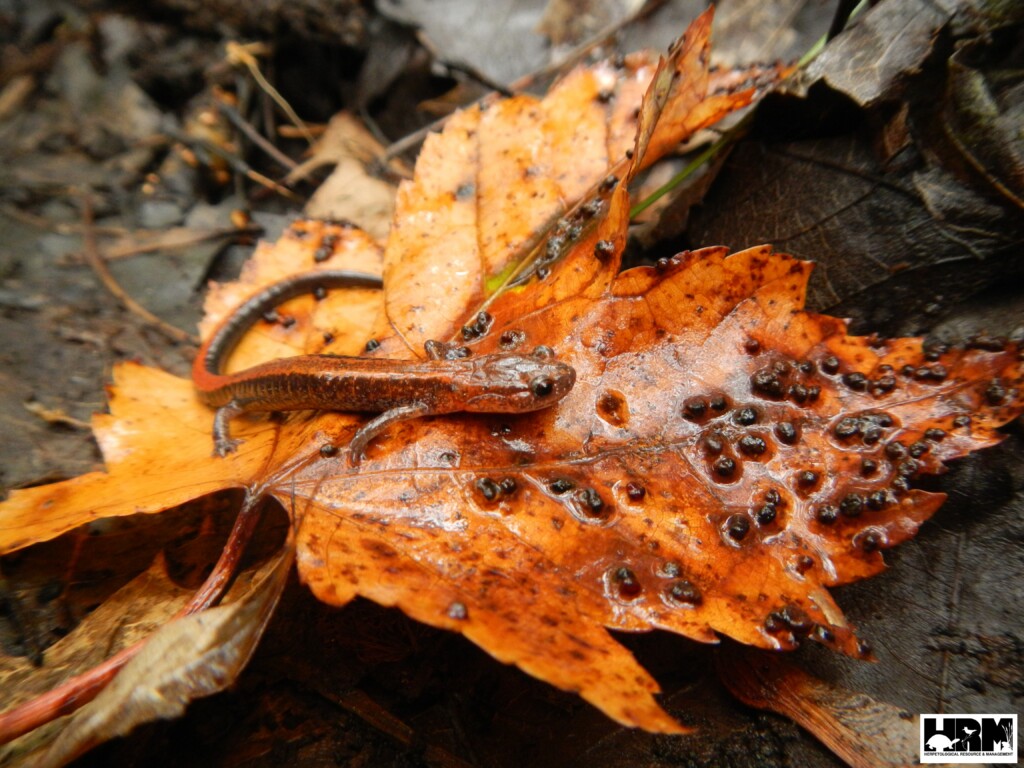
Habitat:
Inhabit deciduous, coniferous, and mixed woodlands. Wide range of forest conditions are tolerated except for areas prone to flooding or with dry, sandy soils. Most often associated with fallen bark, logs, leaf litter, and rocks for cover.
Conservation:
May be the most abundant vertebrate in many woodlands with densities of 500 to 9,000 salamanders per hectare with variation related to soil moisture and habitat structure. A portion of the population is found underneath the surface. The species “process and recycle” vast numbers of prey and contribute to the food supply for many predators. They are a tolerant species that can persist in human-modified woodlands so long as critical habitat components (fallen logs, leaf litter, humid understory) are conserved.
Best Management:
Avoid clearcutting as this species is dependent on closed canopies. To enhance habitats, the use of coarse woody debris can be an important addition. Maintain the litter layer to provide appropriate microhabitats and soil moisture. Avoid using plastic or photodegradable soil erosion control netting as species can become entangled.
Adult Coloration:
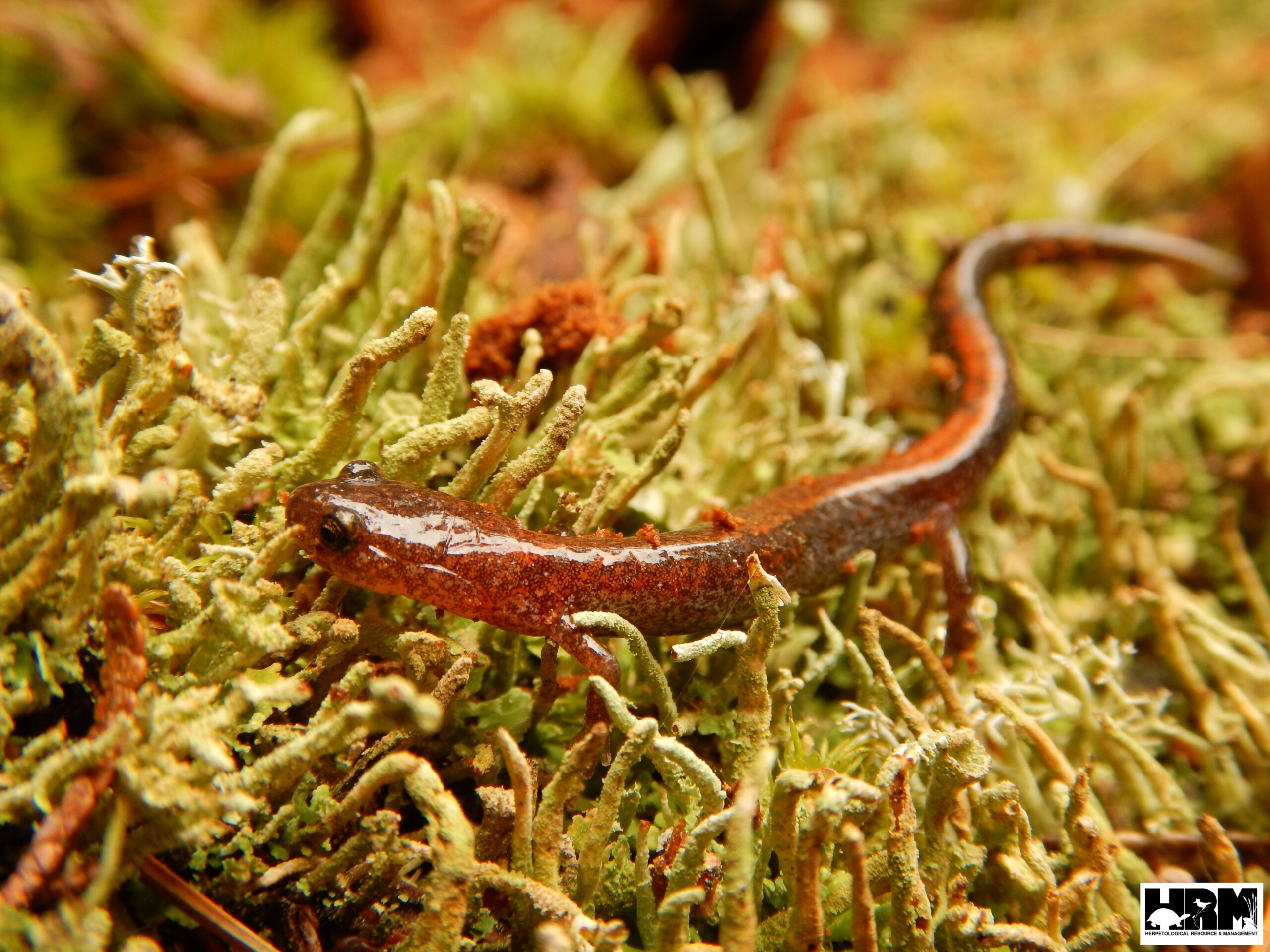
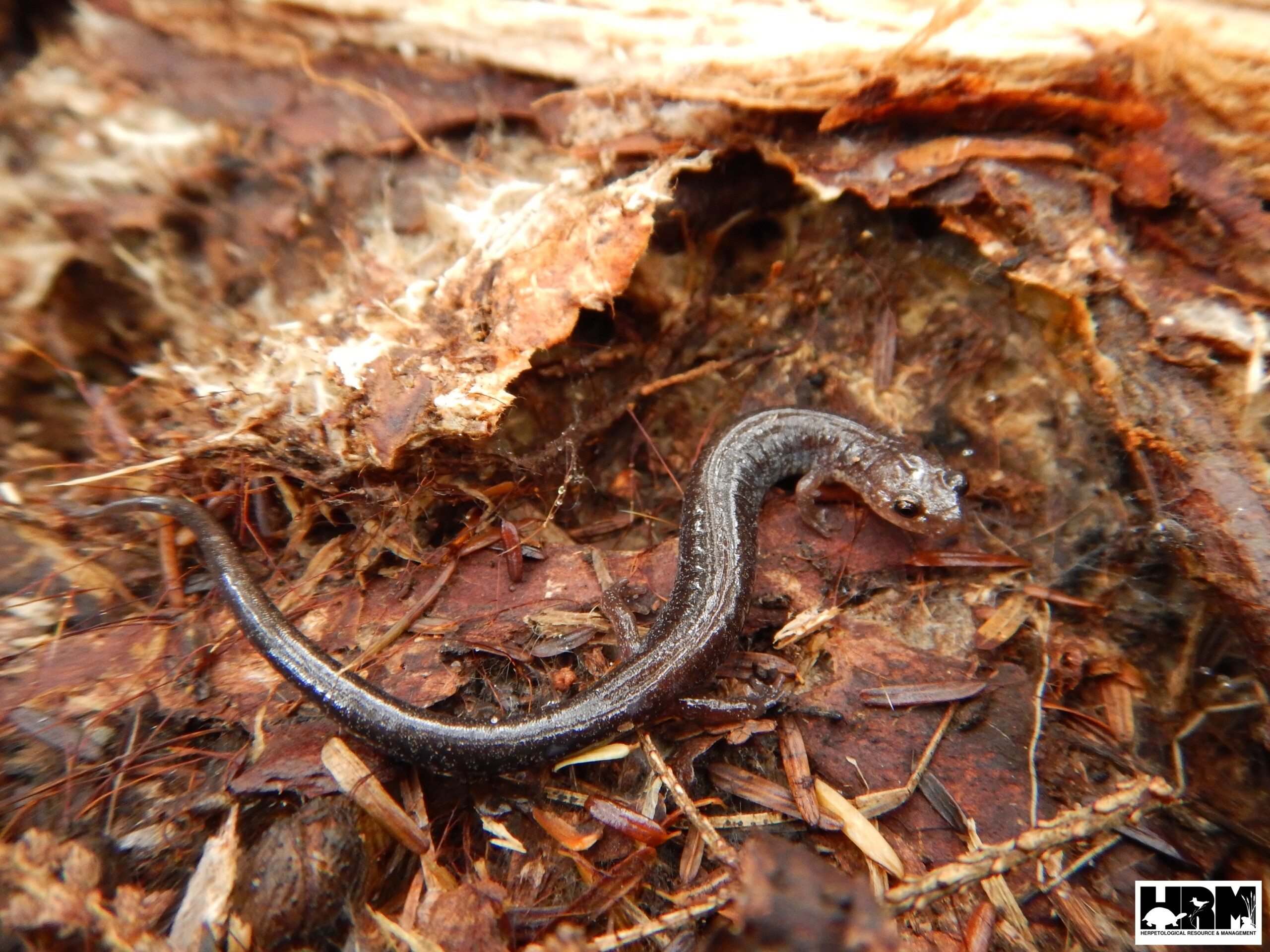
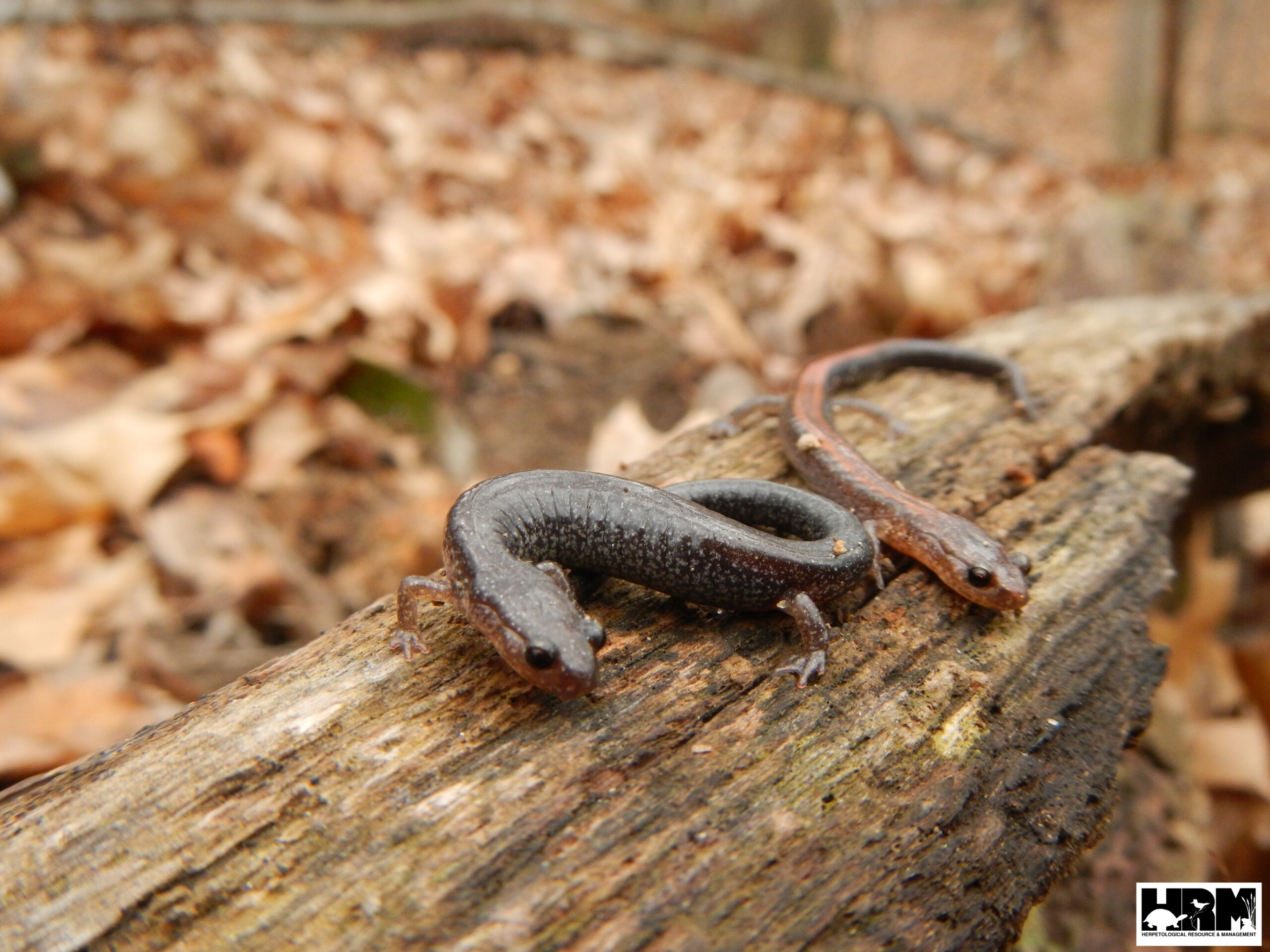
Two color phases: “red–backed” has red, orange-red, or brownish-red stripe from the back of the head to the middle of the tail that is bordered by dark grey or black; while “lead-backed” or “lead-phase” lack the colored stripe and is uniformly dark on the back and sides with faint white speckles. Sometimes can occur as an intermediate of the two phases. In both, the belly has white and grey mottling.
Adult Characteristics:
Small, slender salamander with very small legs and rounded tails. 17-22 (usually 18 or 19) costal grooves (grooves between rib-like ridges that run down the sides of the body).
Larvae Characteristics:
There is no aquatic larval stage for this species. Young have gill buds for the first few days after hatching and have the same coloration as adults.
Species Confused With:
Ambystoma salamanders are stouter than Red-backed Salamanders and do not have naso-labial grooves (a groove running from the nostril to the lip).
Photos:
References:
- Amphibians and Reptiles of the Great Lakes Region by Jim Harding
- Conant, R., and Collins, J. T. 1998. Reptiles and Amphibians: Eastern, Central North America. Houghton Mifflin Harcourt Press.
- Harding, J and D. Mifsud. 2017. Amphibians and Reptiles of the Great Lakes Region: Revised Edition. Ann Arbor: The University of Michigan Press.
- Harding, J.H. and J.A. Holman. 1992. Michigan Frogs, Toads, and Salamanders. MSU Cooperative Extension Service and MSU Museum. Extension Bull. E-2350, 144 pp.
- Holman, J. A. 2012. The Amphibians and Reptiles of Michigan: A Quaternary and Recent Faunal Adventure. Detroit, Mich., Wayne State University Press.
- Mifsud, David A., Sano, Melissa R., Seguchi, Kotaro J., 2026. Michigan Amphibian and Reptile Best Management Practices Third Edition. Herpetological Resource and Management Technical Publication 2026
- Ruthven, A. G., H. B. T. Gaige, et al. 1912. The herpetology of Michigan, by Alexander B. Ruthven. Crystal Thompson and Helen Thompson; Memoranda towards a bibliography of the archaeology of Michigan, by Harlan I. Smith; prepared under the direction of Alexander G. Ruthven. Lansing, Mich., Wynkoop Hallenbeck Crawford, State Printers.