
Fowler’s Toad
Overview:
Scientific Name: Bufo (Anaxyrus) fowleri
Size: 2 – 3.7” (adult size)
Status: Locally abundant in ideal habitat conditions, has experienced significant declines throughout the Great Lakes region
Michigan State Status: Special Concern
MDNR Wildlife Action Plan Status: Species of Greatest Conservation Need
Habitat:
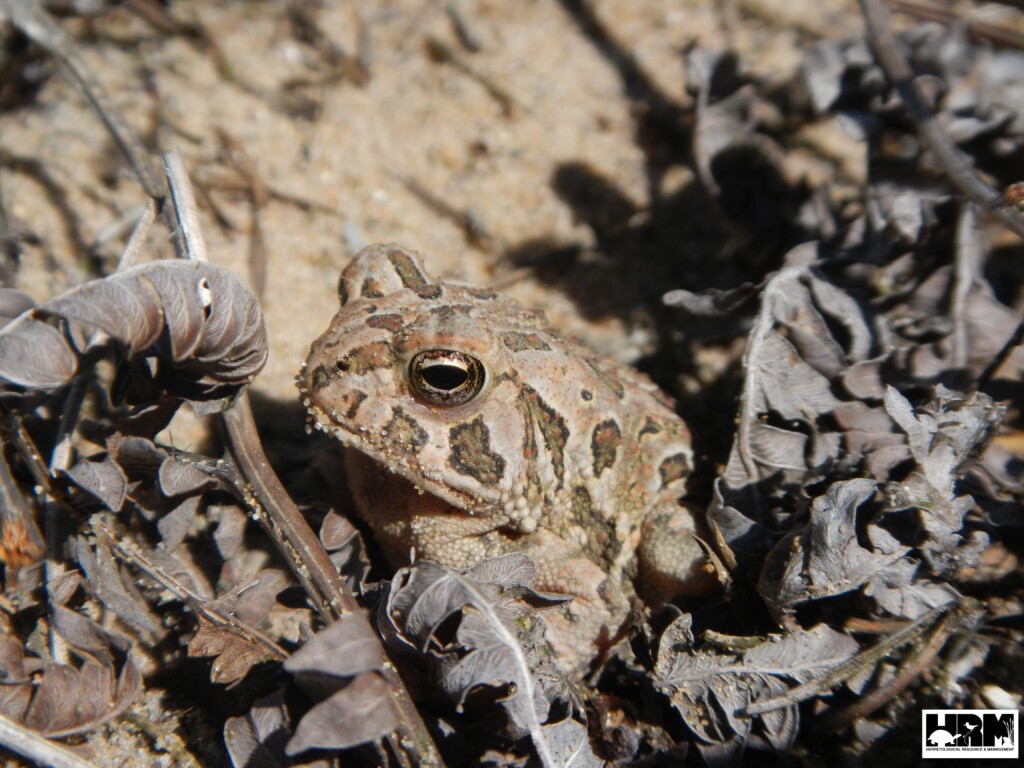
Inhabits open woodlands, sandy prairies, meadows, and beaches. Can occur in suburban or agricultural areas. Prefer sandy soils especially along lakeshores and river valleys.
Conservation:
The degradation of suitable upland and wetland habitats is a major issue impacting the Fowler’s Toad which is currently listed as a species of special concern in Michigan. Accelerated vegetative succession, the introduction of invasive species, and chemical/heavy metal pollutants have degraded the quality of many suitable wetland habitats. Destructive recreational activities such as off-road driving within sandy prairie and beach habitat also pose a critical threat.
Best Management:
Identify and protect quality Fowler’s toad habitat containing extant populations. Shallow, open water habitat should be managed by controlling and intercepting nutrient inputs. Avoid the mechanical removal of aquatic weeds and prevent the introduction of invasive vegetation. Consider appropriately altering lake or river levels if aquatic vegetation is excessive. If vernal pools are present, do not impact the pool depression or core buffer area within a minimum of 100 feet and aim to protect a wider buffer area of 600 – 1000 feet. Maintain a forest canopy (>50%) as well as habitat corridors and consider restoring or creating vernal pools. Ensure course woody debris is scattered and that the litter layer and understory vegetation are maintained to provide appropriate microclimates. Regulate destructive recreational activities that are conducted on beach and dune habitats. Identify and prevent non-point nutrient inputs. Implement vegetated buffer zones between areas actively using chemicals and aquatic systems and intercept the runoff of chemicals before they reach the intended protected system. If chemicals need to be used, apply during late summer and early fall. Provide egg laying structures by submerging finely brushed trees or bushes in breeding sites and ensure native aquatic plant communities are present.
Adult Coloration:
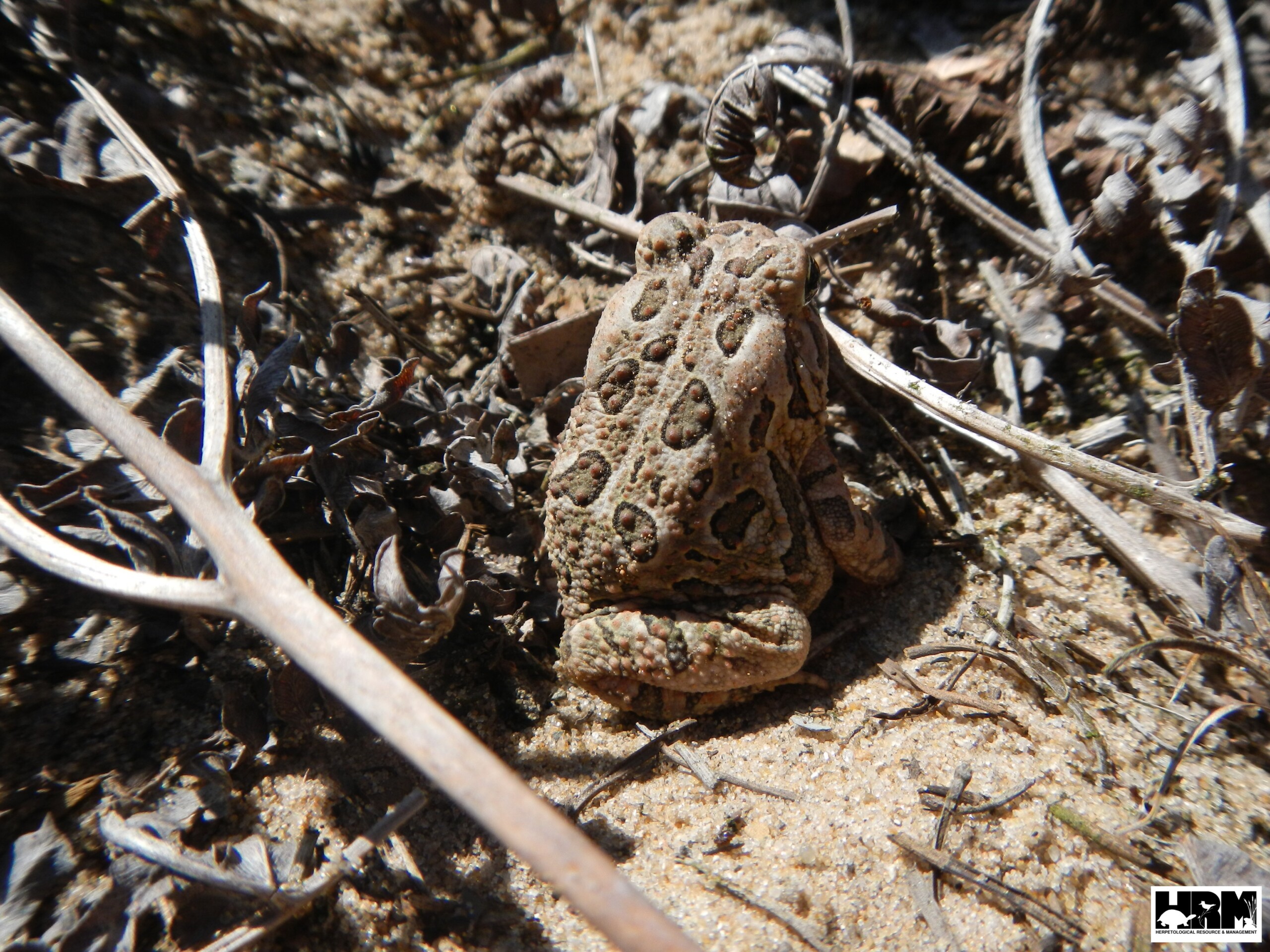
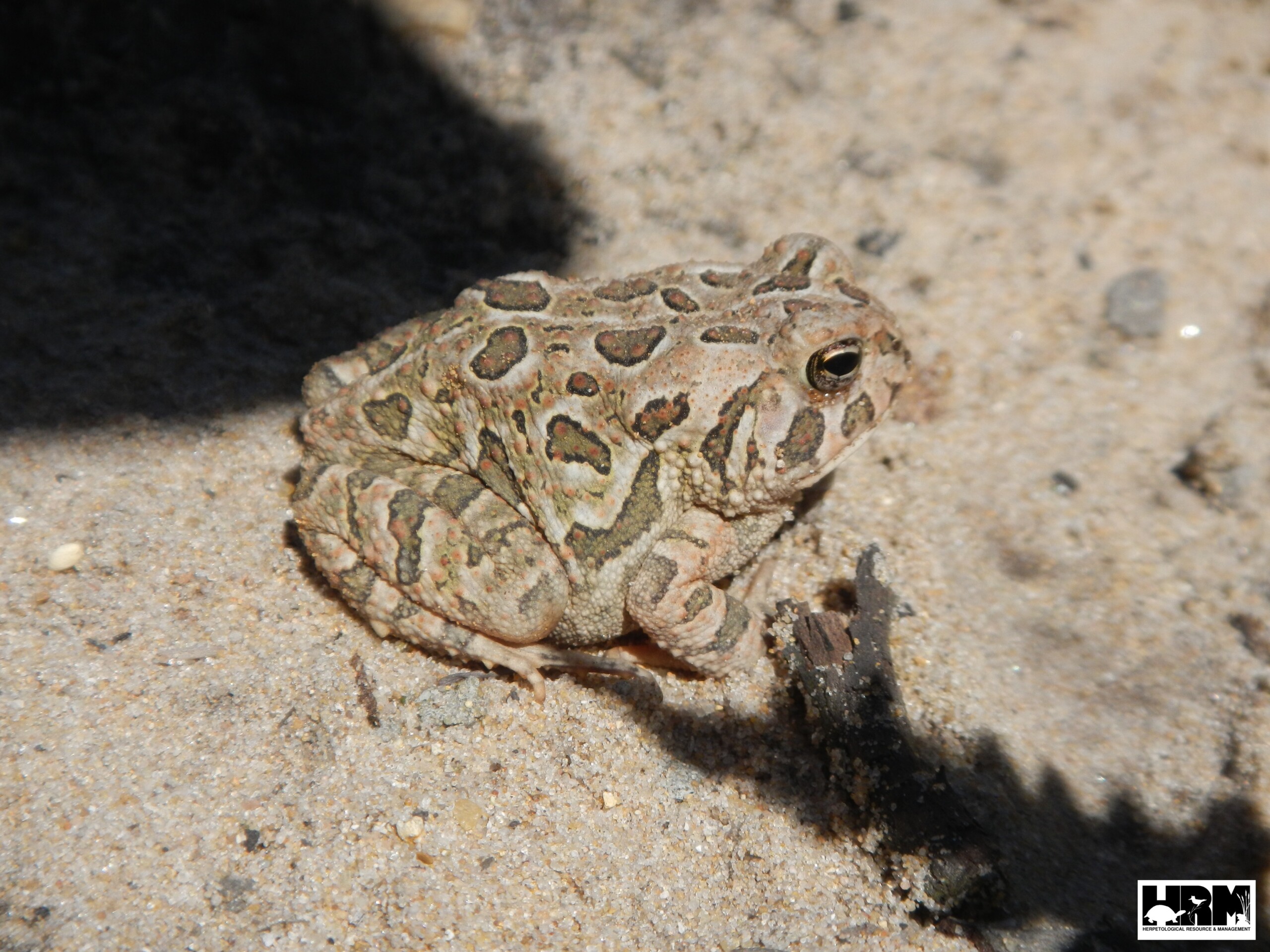
Body coloration varies from tan to brown to olive green to grey often with a light stripe down the middle of the back. The back usually has several dark spots or blotches. The underside is light in color with a few dark spots on the chest.
Adult Characteristics:
Similar to the Eastern American Toad; typical toad with warty skin, a stout body, and short hind legs. Spots on the back will contain three or more warts. Males are smaller than females and have enlarged dark thumbs and a greyish throat indicating the vocal sac.
Breeding Interval: Once annually
Breeding Season: May – June
Range Number of Offspring: 7,000 – 10,000 eggs
Average Number of Offspring: 8,500 eggs
Range Time to Hatchling: 2 – 7 days (metamorphosis: 30 – 40 days)
Average age at sexual/reproductive maturity (female): 1 – 3
Average age at sexual/reproductive maturity (males): 1 – 3
Diet: Insects and other terrestrial invertebrates as adults. Tadpoles eat on algae, plants, bacteria, and other organic material.
Known Predators: Snakes, birds, and small mammals
Larvae Characteristics:
Tadpoles are small and black or blackish brown.
Species Confused With:
Very similar to the Eastern American Toad, which has only one or two warts per spot and has larger warts on the bottom of the hind legs. Eastern American toads also show more heavy spotting on the chest area. These species can additionally be distinguished by their call, with the Eastern American Toad having a more musical prolonged trill and Fowler’s Toad with a lower pitched, shorter, more nasal “waa.”
Photos:
References:
- Behler, J., N. Society. 1996. National Audubon Society Field Guide to North American Reptiles & Amphibians. United States: Alfred A. Knopf, Inc..
- Collins, J., R. Conant. 1991. Peterson Field Guides: Reptiles and Amphibians ( Eastern/Central North America). Boston and New York: Houghton Mifflin Company.
- Harding, J and D. Mifsud. 2017. Amphibians and Reptiles of the Great Lakes Region: Revised Edition. Ann Arbor: The University of Michigan Press.
- Harding, J., J. Holman. 1992. Michigan Frogs, Toads, and Salamanders: A Field Guide and Pocket Reference. East Lansing, MI: Cooperative Extension Service, Michigan State University.
- Mifsud, David A., Sano, Melissa R., Seguchi, Kotaro J., 2026. Michigan Amphibian and Reptile Best Management Practices Third Edition. Herpetological Resource and Management Technical Publication 2026
- Vereecke, M. 2001. “Anaxyrus fowleri” (On-line), Animal Diversity Web. Accessed February 10, 2025 at https://animaldiversity.org/accounts/Anaxyrus_fowleri/
- Wright, A., A. Wright. 1949. Handbook of Frogs and Toads of the United States and Canada. Ithaca, New York: Comstock Publishing Company, Inc..