
Four-toed Salamander
Overview:
Scientific Name: Hemidactylium scutatum
Size: 2 – 4” (adult size)
Status: Locally present within a limited range of habitats due to its specialized habitat needs
MDNR Wildlife Action Plan Status: Species of Greatest Conservation Need
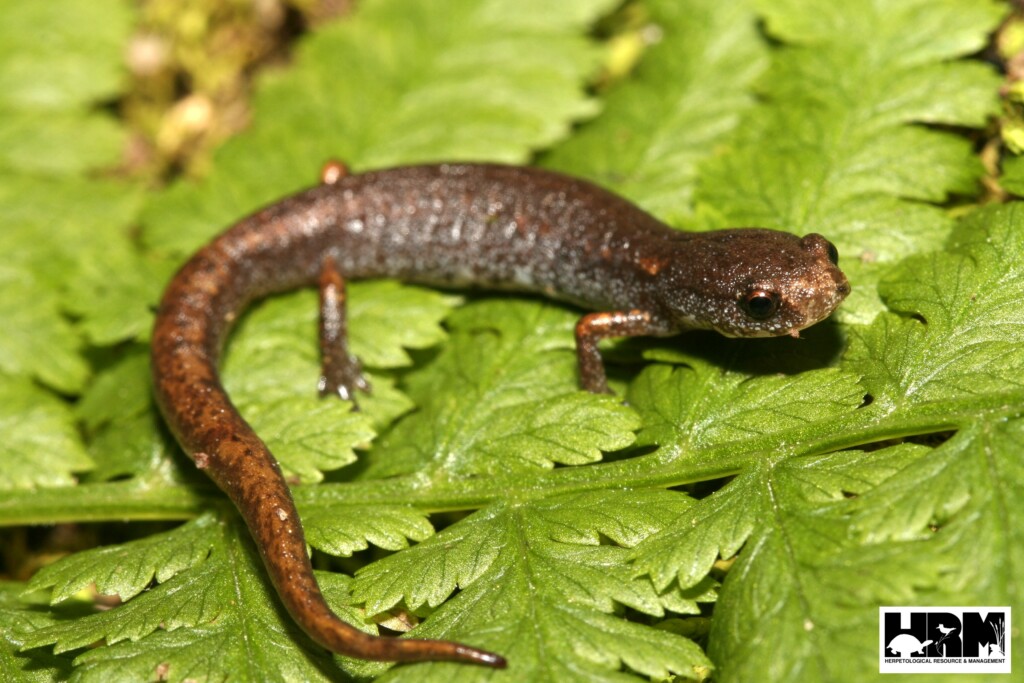
Habitat:
Inhabit moist deciduous, coniferous, or mixed woodlands often in close vicinity to spring-fed creeks, sphagnum seepages, bogs, or boggy ponds.
Conservation:
The spotty distribution is related to the scarcity of breeding habitat where populations become isolated colonies and opportunity for dispersal is limited or nonexistent. This makes them more vulnerable to human activities. Identifying and preserving known habitat will help to preserve this species and other rare and specialized flora and fauna.
Best Management:
Assessments of habitat connectivity and prioritization of areas with buffer zones will help to reduce human disturbances to the species. To enhance habitats, the use of coarse woody debris can be an important addition. Maintain the litter layer to provide appropriate microhabitats and soil moisture.
Adult Coloration:
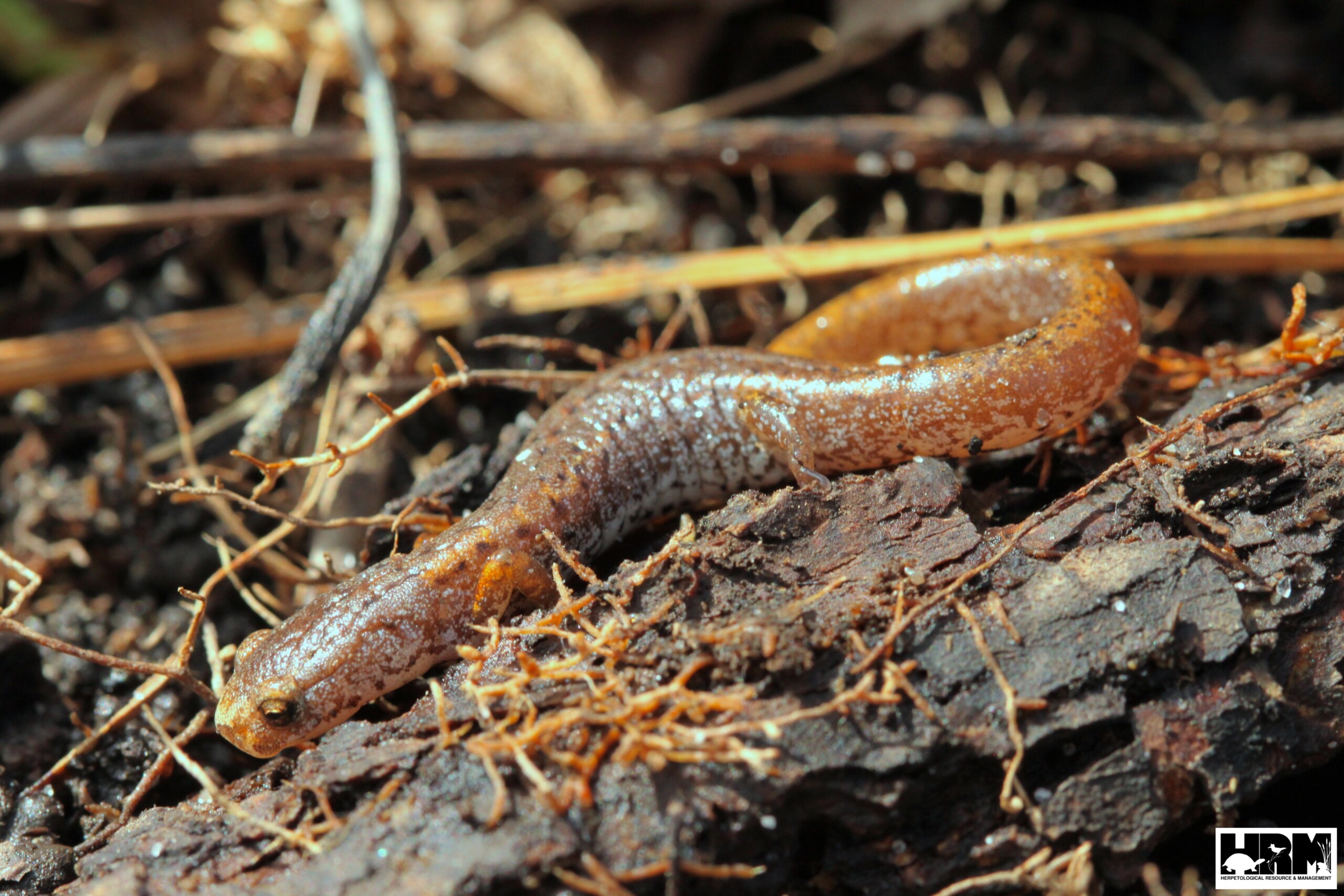
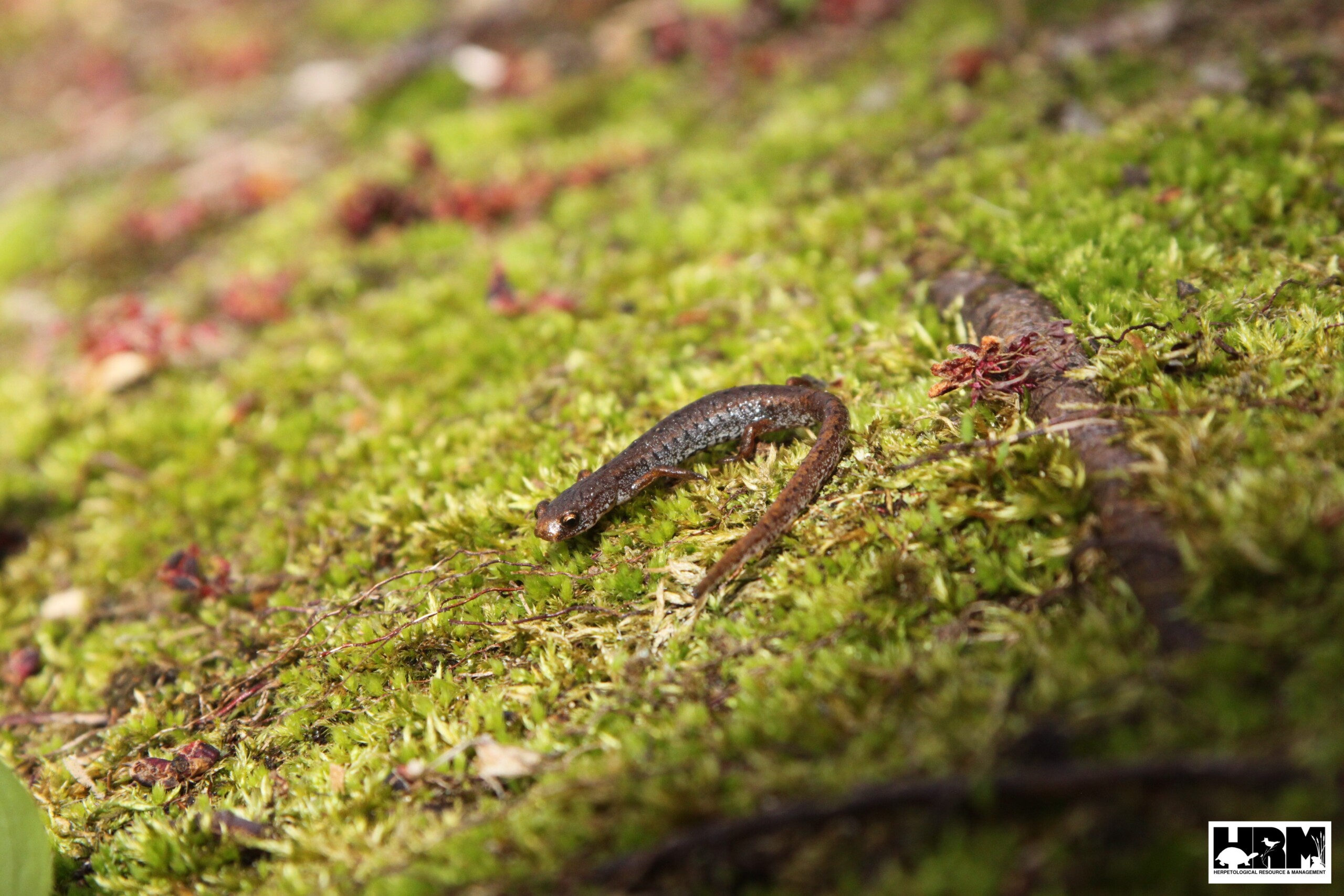
Reddish or greyish-brown with black and light bluish speckling down the sides. The belly is white or bluish-white with small black spots.
Adult Characteristics:
Very small, slender salamander with four toes on each hind foot. 13-14 costal grooves (grooves between rib-like ridges that run down the sides of the body). Males are smaller than females with relatively longer tails. In males the snout appears squared off from above while in females it is more rounded.
Larvae Characteristics:
Newly hatched aquatic larvae are yellow, orange and green tinted on the head with numerous black spots that merge into a Y-shaped mark on the back of the head and a dark band behind the eye. The upper tail fin extends up the back and nearly onto the head.
Species Confused With:
No other salamander has a pure white belly with black spots and four-toed hind feet.
Photos:
References:
- Amphibians and Reptiles of the Great Lakes Region by Jim Harding
- Conant, R., and Collins, J. T. 1998. Reptiles and Amphibians: Eastern, Central North America. Houghton Mifflin Harcourt Press.
- Harding, J and D. Mifsud. 2017. Amphibians and Reptiles of the Great Lakes Region: Revised Edition. Ann Arbor: The University of Michigan Press.
- Harding, J.H. and J.A. Holman. 1992. Michigan Frogs, Toads, and Salamanders. MSU Cooperative Extension Service and MSU Museum. Extension Bull. E-2350, 144 pp.
- Holman, J. A. 2012. The Amphibians and Reptiles of Michigan: A Quaternary and Recent Faunal Adventure. Detroit, Mich., Wayne State University Press.
- Mifsud, David A., Sano, Melissa R., Seguchi, Kotaro J., 2026. Michigan Amphibian and Reptile Best Management Practices Third Edition. Herpetological Resource and Management Technical Publication 2026
- Ruthven, A. G., H. B. T. Gaige, et al. 1912. The herpetology of Michigan, by Alexander B. Ruthven. Crystal Thompson and Helen Thompson; Memoranda towards a bibliography of the archaeology of Michigan, by Harlan I. Smith; prepared under the direction of Alexander G. Ruthven. Lansing, Mich., Wynkoop Hallenbeck Crawford, State Printers.