
Mudpuppy
Overview:
Scientific Name: Necturus maculosus
Size: 8 – 19.1” (adult size)
Status: Can be locally abundant. Have experienced recent declines or extirpation in many areas where they were once common.
Michigan State Status: Species of Concern
MDNR Wildlife Action Plan Status: Species of Greatest Conservation Need
Habitat:
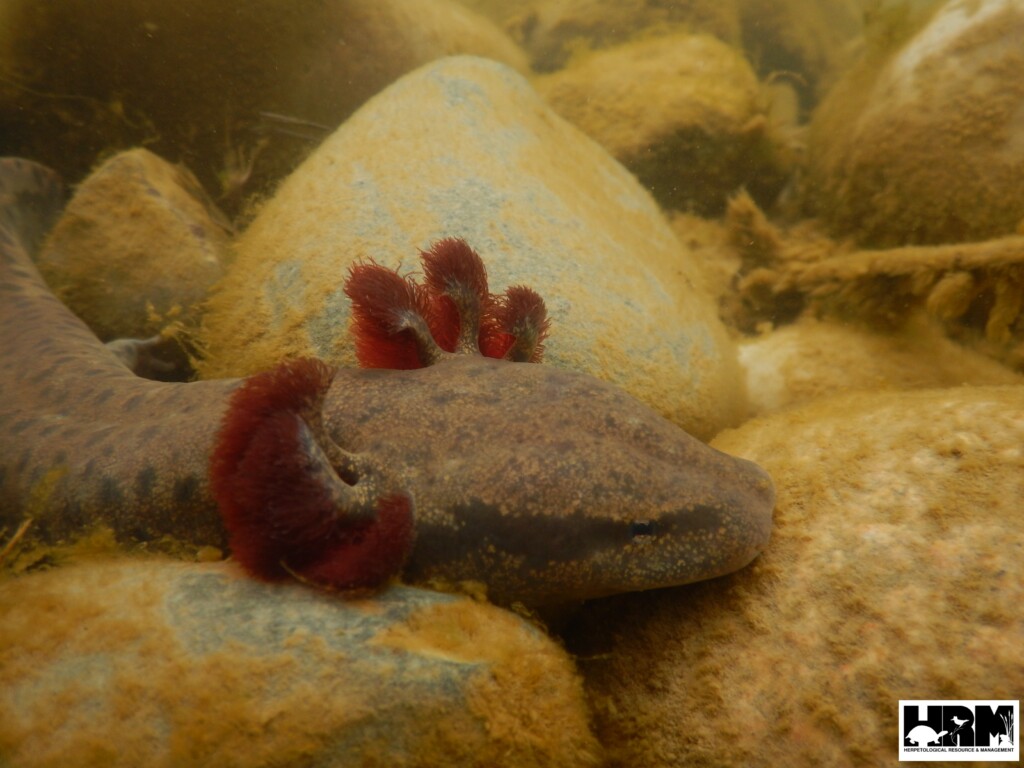
Inhabit permanent waters including rivers, reservoirs, inland lakes, and the Great Lake’s bays and shallows. Utilize rocks and other submerged objects for refuge.
Conservation:
Although Mudpuppy’s may be locally abundant, they are experiencing recent population declines or extirpation throughout their range. Often acknowledged as “bio-indicators”, mudpuppies are capable of recognizing changes in water quality due to their sensitivity to contaminants and thus act as an early detection system for environmental problems. In Michigan, the Mudpuppy has since been elevated to a species of special concern and of greatest conservation need. Many issues pose a threat to the mudpuppy which consists of the development of shoreline habitat, water pollution, the application of lampricide and rotenone, historic overharvesting for biological supply companies, and persecution all contribute to the Mudpuppy’s gradual disappearance from the landscape.
Best Management:
Identify and protect quality mudpuppy habitat containing extant populations. Install or maintain vegetated buffers and natural rock as an alternative to seawalls and hardened channels. Also utilize vegetative buffer zones between areas of contamination and aquatic system. Identify and prevent non-point nutrient inputs as well as chemical runoff from entering the system. If chemicals must be used, apply in later summer and fall. Avoid the use of lampricide and other chemical lamprey control, but if required ensure lampricide is used in target areas and seasons with reduced amphibian presence or inactivity. Apply rotenone or other fish control chemicals late in the year and do not apply in sites containing rare herpetofauna. Provide aquatic structures such as rock shoals to create suitable cover and nesting habitat as well as ensure the presence of native aquatic plant communities. Education and outreach should be implemented to prevent further unjustified persecution. Captive rearing for head starting may be initialized to further support localized populations in severe decline.
Adult Coloration:
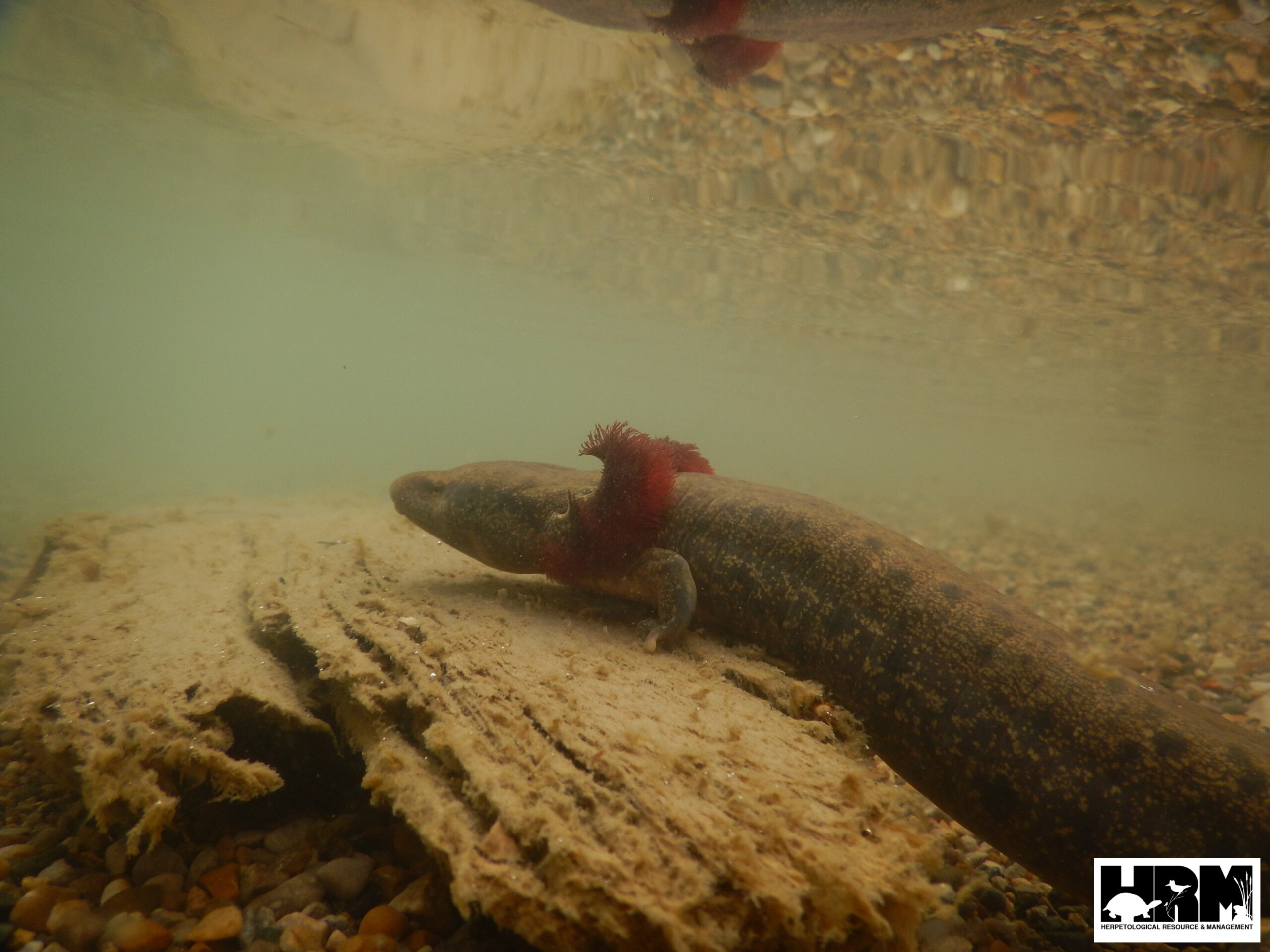
The body, sides, and tail are brown to grayish-brown with scattered bluish-black spots or blotches. Pigmentation may become darker as they age with some elder individuals appearing as solid black. The underside is a pale grey or yellow, often with dark spotting. An irregular dark stripe runs through each eye.
Adult Characteristics:
Large aquatic salamander with reddish gills behind its head. Gills may be larger in warmer, oxygen depleted water and smaller in cooler, oxygen-rich waters. Broad, flat head with small eyes. The tail is vertically compressed (flattened) and has four toes on each foot.
Typical lifespan in wild: 20 years in captivity
Breeding interval: once annually
Breeding season: late fall to early winter (delayed fertilization)
Range of number of offspring: 18 – 180
Average number of offspring: 81
Range time too hatchling: 1 – 2 months
Average age at sexual/reproductive maturity (females): 4 – 6 years
Average age at sexual/reproductive maturity (males): 4 – 6 years
Diet: crayfish, insect larvae, small fish, fish eggs, aquatic worms, snails, other amphibians, and carrion.
Predators: Water Snakes, large predatory birds, Herons
Larvae Characteristics:
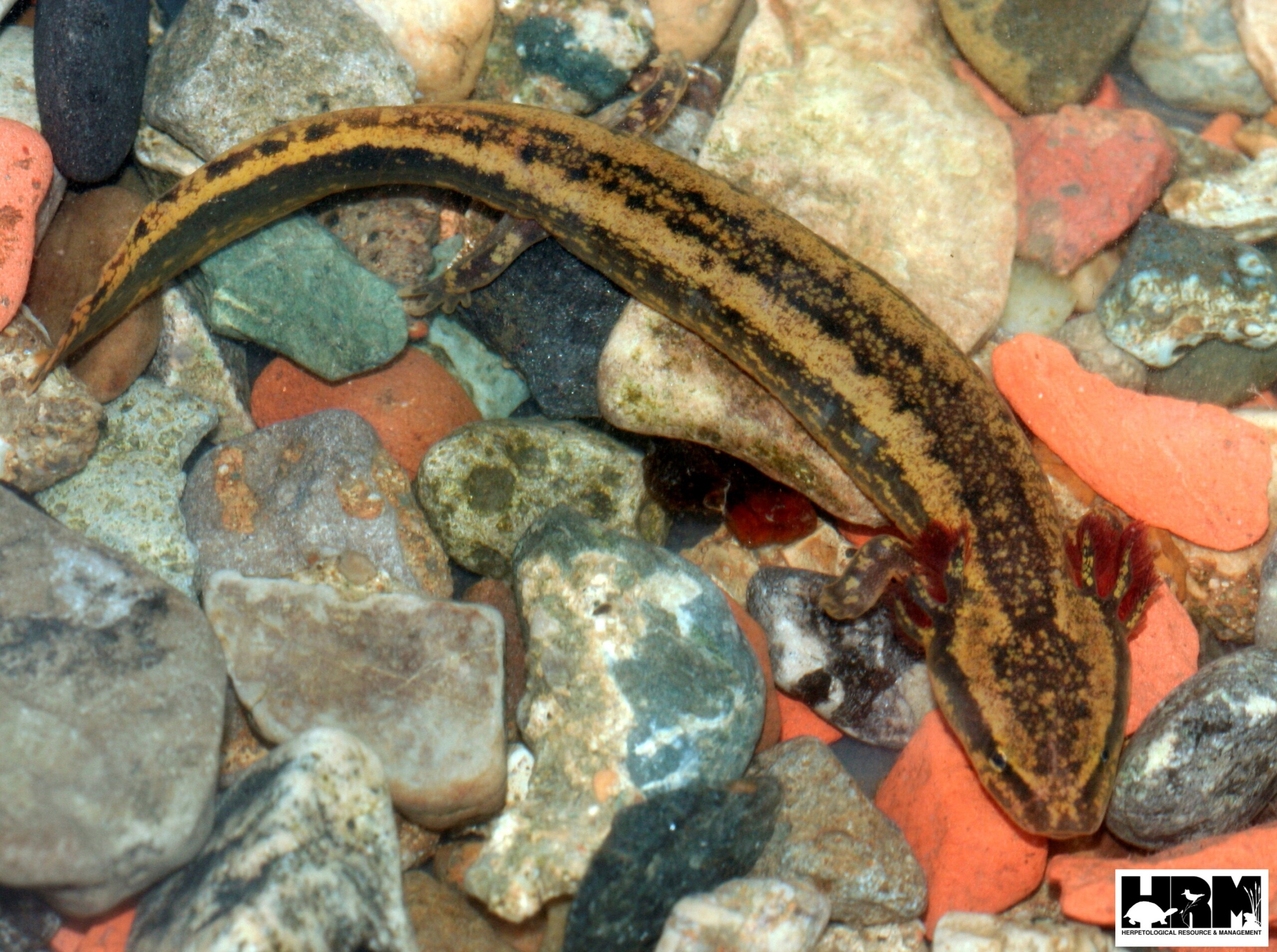
Generally black with a yellow or cream stripe down each side from the nose to the tail.
Species Confused With:
Mole salamander larvae can be mistaken for small mudpuppies, but these have five toes on each foot. The Western Lesser Siren have external gills but are more eel-like and lack hind legs.
Photos:
References:
- Amphibians and Reptiles of the Great Lakes Region by Jim Harding
- Conant, R., and Collins, J. T. 1998. Reptiles and Amphibians: Eastern, Central North America. Houghton Mifflin Harcourt Press.
- Harding, J and D. Mifsud. 2017. Amphibians and Reptiles of the Great Lakes Region: Revised Edition. Ann Arbor: The University of Michigan Press.
- Harding, J.H. and J.A. Holman. 1992. Michigan Frogs, Toads, and Salamanders. MSU Cooperative Extension Service and MSU Museum. Extension Bull. E-2350, 144 pp.
- Holman, J. A. 2012. The Amphibians and Reptiles of Michigan: A Quaternary and Recent Faunal Adventure. Detroit, Mich., Wayne State University Press.
- Mifsud, David A., Sano, Melissa R., Seguchi, Kotaro J., 2026. Michigan Amphibian and Reptile Best Management Practices Third Edition. Herpetological Resource and Management Technical Publication 2026
- Ruthven, A. G., H. B. T. Gaige, et al. 1912. The herpetology of Michigan, by Alexander B. Ruthven. Crystal Thompson and Helen Thompson; Memoranda towards a bibliography of the archaeology of Michigan, by Harlan I. Smith; prepared under the direction of Alexander G. Ruthven. Lansing, Mich., Wynkoop Hallenbeck Crawford, State Printers.