
Small-mouthed Salamander
Overview:
Scientific Name: Ambystoma texanum
Size: 4.3 – 7” (adult size)
Status: Rare and declining throughout range.
Michigan State Status: Endangered
MDNR Wildlife Action Plan Status: Species of Greatest Conservation Need
Habitat:
Prefer lowland floodplain woodlands but also occur in areas with fragmented degraded forest cover or in prairies and agricultural land. Habitat must contain shallow waters for breeding such as vernal pools.
Conservation:
Despite being relatively abundant throughout their range, small-mouthed salamander populations are scarce along the northernmost periphery of their extent. Listed as endangered in the state of Michigan, activities like deforestation due to timber harvest or land conversion for agriculture puts these northern populations of small-mouthed salamanders at increased risk of extirpation.
Best Management:
Identify and protect quality small-mouthed salamander habitat containing extant populations. Quality habitat consists of woodland areas containing shallow, fish-free ponds. Do not impact pool depression or core buffer area within 100 feet and aim to protect a wider buffer of 600-1000 feet. Ensure a forest canopy of >50% is maintained as well as habitat corridors between breeding pools and adjacent habitat. If needed, restore or create additional vernal pools. If harvest is required, harvest during late fall to early winter in rotated cuts and consider various tree harvesting techniques instead of clear cutting. Use coarse woody material to create simple habitat structures and maintain the litter layer as well as understory vegetation to provide appropriate microclimate. If chemical contamination is a potential, create vegetative buffer zones between areas of chemical application and aquatic systems. Provide egg laying structures by submerging finely brushed trees or bushes in breeding pools and ensure native aquatic plant communities are present. Additional aquatic structures may be placed in shallow water.
Adult Coloration:
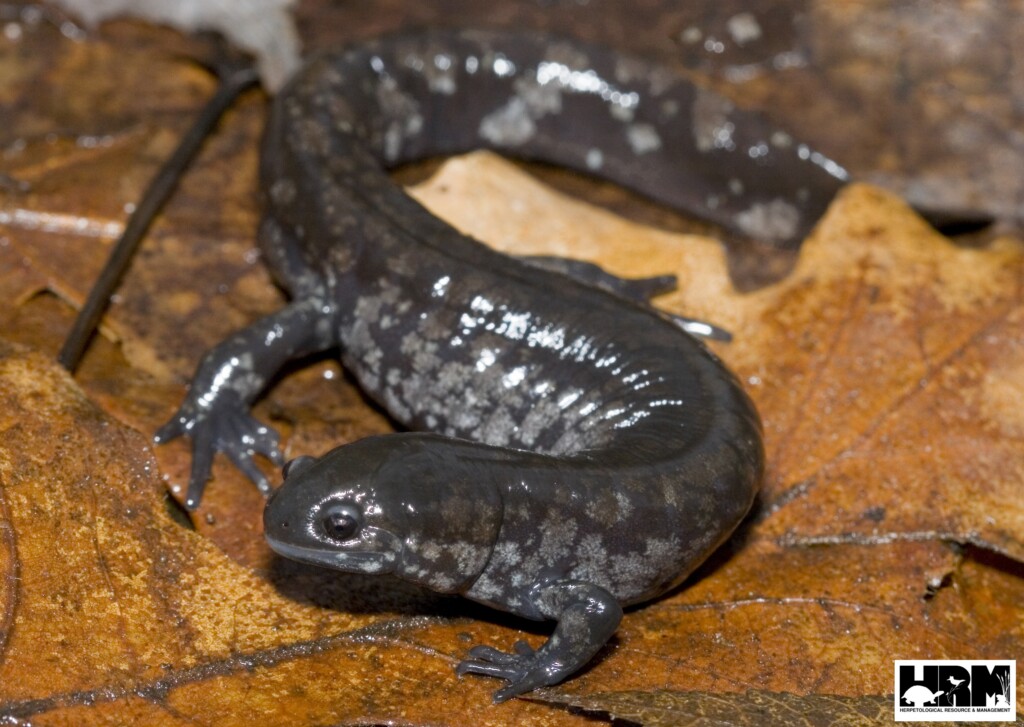
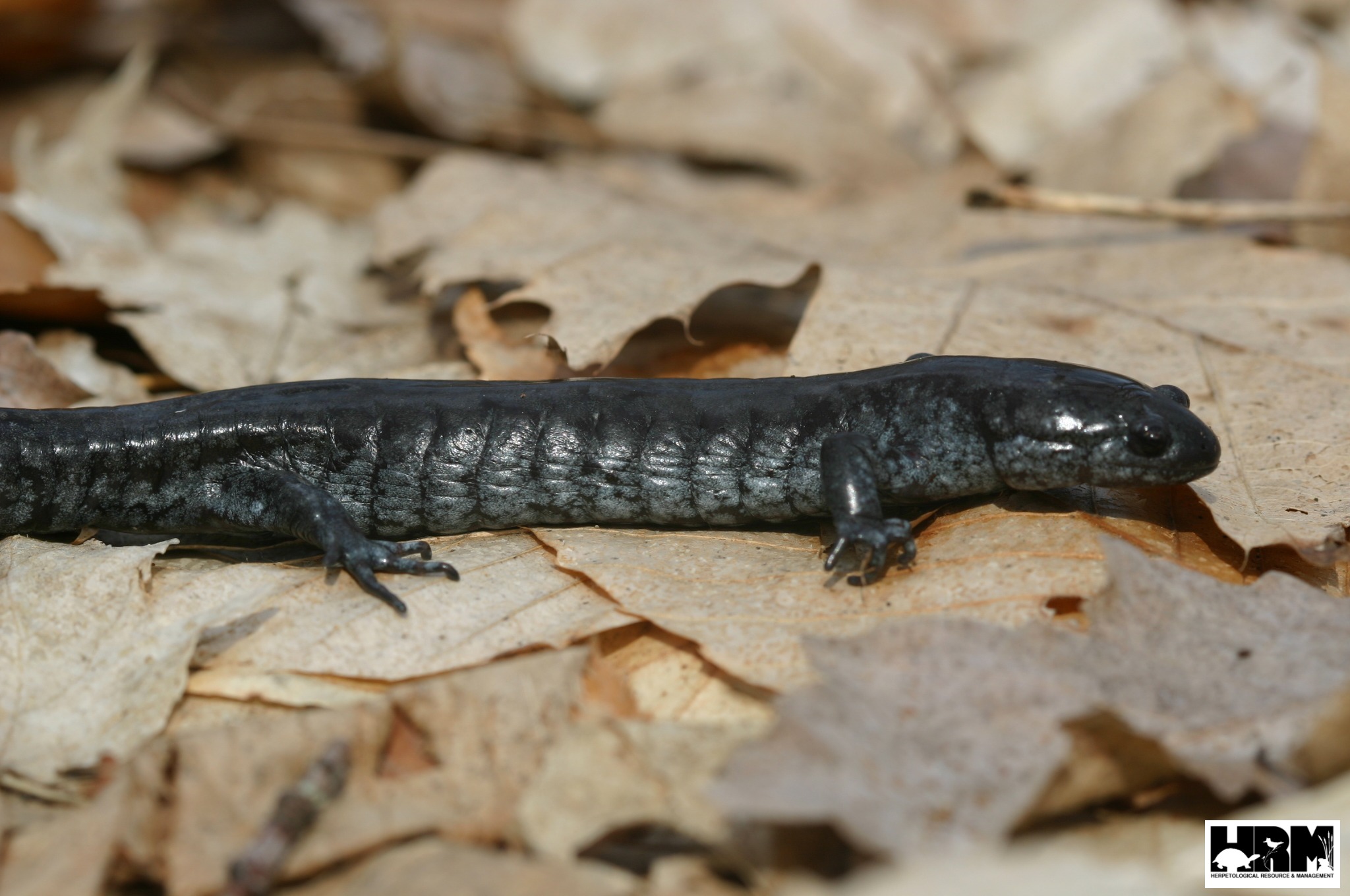
The backside varies from light grey to brownish-grey or black with an irregular pattern of grey or white blotches and flecks on the top of the body. This pattern is most dense on the sides and extends onto the dark belly. May appear paler with lighter markings in breeding ponds.
Adult Characteristics:
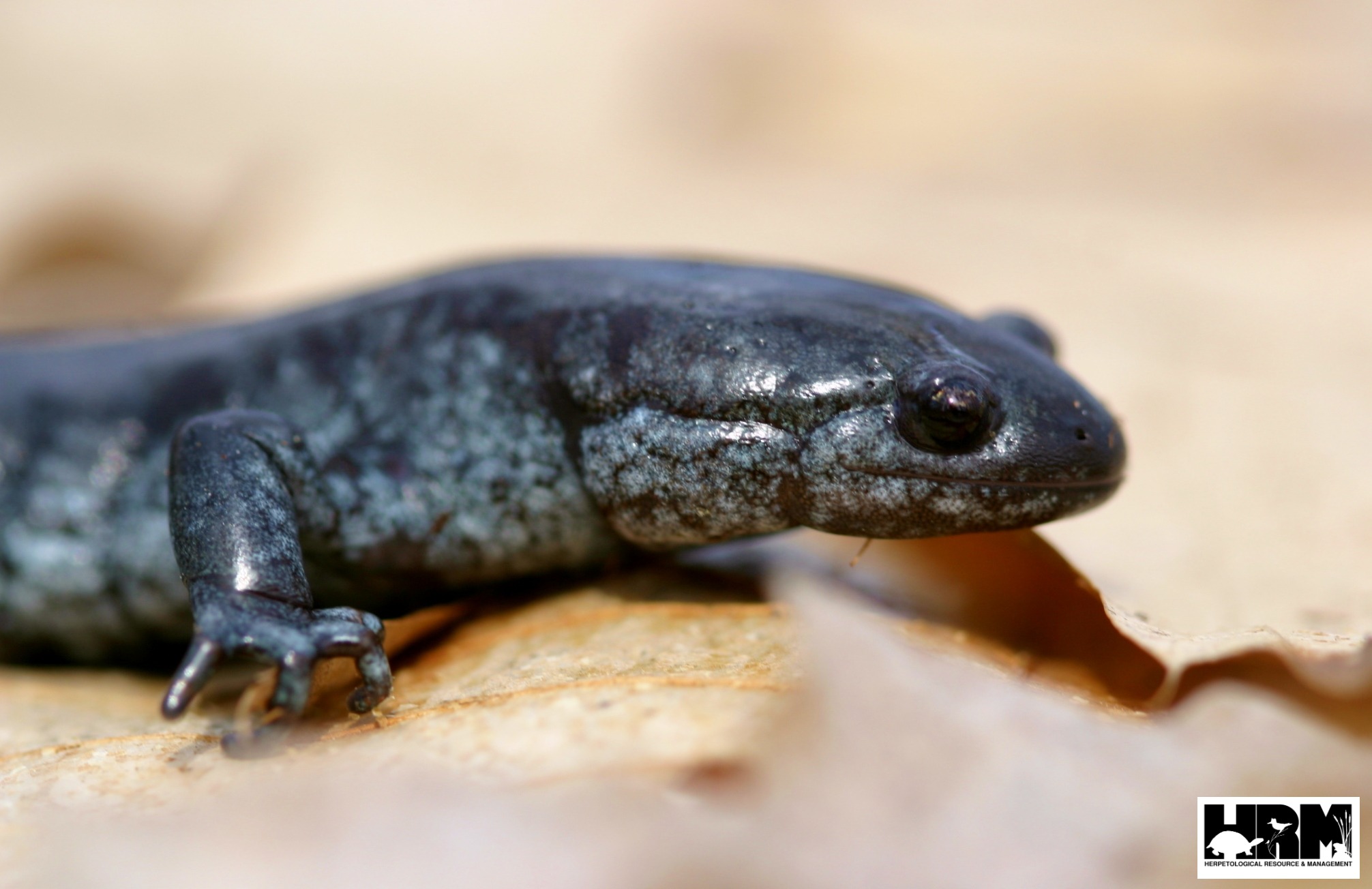
14 -16 costal grooves (grooves between rib-like ridges that run down the sides of the body). Relatively small head with a very short, blunt snout with the lower jaw slightly protruding from the upper jaw. Males are slightly smaller than females and have longer, more flattened tails. Males have swollen vents in breeding season.
Typical lifespan in wild: 5 years
Breeding interval: once annually
Breeding Season: early spring
Range number of offspring: 300 – 700
Average number of offspring: 500
Range time to hatchling: 3 – 8 weeks (metamorphosis: 2 – 3 months)
Average age at sexual/reproductive maturity (females): 2 years old
Average age at sexual/reproductive maturity (males): 2 years old
Diet: insects, arthropods, slugs, worms, and occasionally aquatic crustaceans. Larvae prey on small aquatic invertebrates like daphnia, isopod hatchlings, as well as other amphibian larvae
Predators: Blue Jays, Garter Snakes, Water Snakes, dragonfly larvae, Tiger Salamander larvae
Larvae Characteristics:
Young larvae are dark brown or olive green with light bars or crossbands on the back. Older larvae may still have these bars and may have a light stripe down each side of the back. These markings often are obscured by dark pigment as larvae near metamorphosis.
Species Confused With:
Blue-spotted Salamanders have longer snouts and blue markings on the sides. Marbled Salamanders have a bold pattern of white bands on a black body. Lead phase Red-backed Salamanders have a groove running from the nostril to the lip.
Photos:
References:
- Amphibians and Reptiles of the Great Lakes Region by Jim Harding
- Conant, R., and Collins, J. T. 1998. Reptiles and Amphibians: Eastern, Central North America. Houghton Mifflin Harcourt Press.
- Harding, J and D. Mifsud. 2017. Amphibians and Reptiles of the Great Lakes Region: Revised Edition. Ann Arbor: The University of Michigan Press.
- Harding, J.H. and J.A. Holman. 1992. Michigan Frogs, Toads, and Salamanders. MSU Cooperative Extension Service and MSU Museum. Extension Bull. E-2350, 144 pp.
- Holman, J. A. 2012. The Amphibians and Reptiles of Michigan: A Quaternary and Recent Faunal Adventure. Detroit, Mich., Wayne State University Press.
- Mifsud, David A., Sano, Melissa R., Seguchi, Kotaro J., 2026. Michigan Amphibian and Reptile Best Management Practices Third Edition. Herpetological Resource and Management Technical Publication 2026
- Ruthven, A. G., H. B. T. Gaige, et al. 1912. The herpetology of Michigan, by Alexander B. Ruthven. Crystal Thompson and Helen Thompson; Memoranda towards a bibliography of the archaeology of Michigan, by Harlan I. Smith; prepared under the direction of Alexander G. Ruthven. Lansing, Mich., Wynkoop Hallenbeck Crawford, State Printers.